How Architecture Tours in Chicago Explain the Great Chicago Fire’s Impact
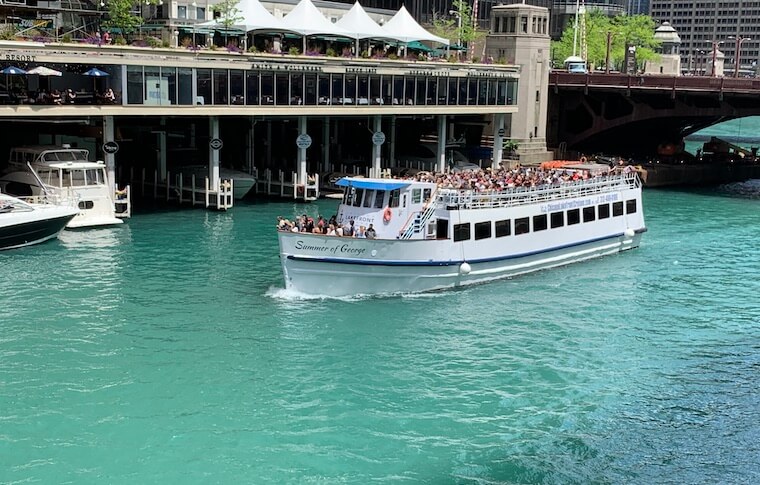
Step onto a boat on the Chicago River, and the city lines up like a ledger. Facades read as entries, dates and decisions stamped into glass, brick, and terra cotta. Nearly every knowledgeable guide on the water starts the story the same way: before the towers and the riverwalk, before the bascule bridges, there was a fire. Not the small kind that consumes a block, but the kind that rearranges a city’s DNA.
The Great Chicago Fire of 1871 is not just a chapter in local lore, it is the interpretive key for understanding the skyline. On chicago architecture boat tours, the fire frames the narrative, not as a tragedy isolated in time, but as an accelerant for a distinct building culture that still determines how the city looks and works. You hear the dates, you hear the numbers, then you see how materials and systems changed because of them. The river lets you see it all at once, which is why these tours are so effective as history lessons.
What burned, and why that matters to the skyline
Guides tend to anchor the numbers early so you have scale before the storytelling takes over. Over roughly 36 hours in October 1871, wind drove flames across more than three square miles. About 300 people died, more than 17,000 buildings were destroyed, and around 100,000 residents were left without homes. Loss estimates hovered around 200 million dollars at the time, a staggering sum that stressed the insurance industry and tested civic resolve.
Those facts land harder when you picture what kind of city Chicago was in 1871. The downtown was dense and mostly made of wood. Sidewalks were wooden. Many roofs were wooden. Tar sealed bridges. Weeks of drought had left everything tinder dry. Industrial sites with open flames sat near warehouses packed with flammable material. The fire started on the Near West Side, likely in or near a barn on DeKoven Street, then leapt the South Branch of the river, ignited bridge after bridge, and churned through the Loop and the North Side.
From a boat, that trajectory becomes a line you can trace. Your guide might point toward where the O’Leary farm once stood, somewhere inland from today’s riverbanks, then sweep an arm downriver to explain how a wind that night carried embers across water as if the channel were nothing. The river, which now reads as a stitch binding the city together, did not save Chicago. It funneled air and fire until the winds shifted and rain finally helped.
This is the first lesson tours underscore: the fire was not a freak event alone. It was a failure of building practices, urban arrangement, and basic risk management, all made visible in the wreckage.
The survivors that anchor any tour
Even people who have never visited Chicago have seen the stone Water Tower. On the ground it feels modest among high-rises, but docents treat it as a relic for good reason. The limestone Water Tower and the adjacent Pumping Station are among the few downtown structures that stood through the inferno. They break up the narrative of total loss and give a face to endurance. When guides swing the boat under Michigan Avenue and talk about the Magnificent Mile, they often bring up how the tower’s survival made it a rallying symbol for rebuilding, a bit of Romantic grit in the center of a city that would otherwise be blamed for embracing disposable wood.
A few neighborhoods also kept scattered survivors, mostly small brick structures on the far edges of the burn. But in the central business district, almost everything had to be rebuilt. That blank slate is where the modern identity of Chicago starts, which is why so many river tours show you not only what rose, but why it took those particular forms.
Fire limits and the rush to rebuild
The city moved quickly after the ashes cooled. Relief efforts began within days. More importantly for what you see from the deck of a tour boat, the City Council drew new fire limits. A 1872 ordinance banned new frame construction in the central area, pushed builders toward masonry and iron, restricted wooden cornices, and imposed fire walls and better party wall standards. After another serious fire in 1874 on the South Side, the city extended those limits. There were gaps and political fights, there always are, but the direction was clear: if you build downtown, you build in materials that can resist fire.
These codes did not invent safe building suddenly. They set a floor and nudged markets. Insurance companies altered premiums. Suppliers responded with brick, stone, cast iron columns, and, soon, advances in rolled steel. When you hear a guide rattle off names like Burnham, Root, Holabird, Roche, or Atwood, remember that they were designing for this new reality. The result is a city that, within a generation, would test almost every idea in high-rise construction.
On chicago architecture boat tours, this policy shift becomes concrete. Look at the Monadnock Building, completed in phases in 1891 and 1893, a dark masonry cliff that represents the last gasp for ultra-tall load-bearing brick walls. It is an answer to the fire without a full embrace of iron or steel for its outer shell. By contrast, the Reliance Building around the corner, completed in the mid 1890s, looks airy, almost skeletal. Its white glazed terra cotta and glass curtain wall hang on an internal metal frame. Both are responses to fire codes and insurance realities, but they propose different futures. Docents love that juxtaposition because it lets them talk about evolution, not one perfect solution.
Terra cotta, steel, and the problem of fireproofing
Stand mid-river near the Wrigley Building or the Rookery, and you can start cataloging skins and bones. After 1871, fireproofing turned from an afterthought into a central design problem. Early iron columns twisted in heat, so builders wrapped them. Clay tile, masonry infill, and, particularly in Chicago, architectural terra cotta became common. Terra cotta did two jobs well. It shielded structural members from fire, and, once glazed, it resisted Chicago’s grime and acid rain.
Guides like to pull the boat close to the Wrigley Building’s river facade because you can see how modular the system is. The creamy, almost white exterior is a field of terra cotta units. The choice is not just aesthetic. It is insurance written in ceramic. The Marquette Building and the Reliance show similar logic in a different palette. If you hear a guide tapping the handrail while talking about terra cotta, that is habit picked up from years of emphasizing how tangible, almost hand-sized, these systems can feel if you think in units rather than abstractions.
Steel makes the high-rise possible, of course, and the elevator makes it habitable. Neither invention comes from the fire. But the speed and scale of Chicago’s rebuild created a perfect test bed for both. Capital arrived quickly, labor flooded in, and a pragmatic building culture emerged. The fire did not cause steel-framed skyscrapers all by itself. It pushed the city to adopt them fast, tune the details with field experience, and hardwire fire resistance into their DNA.
The river’s bridges, from fuel to firebreak
The river was an accomplice on the worst night. Bridges that should have acted as barriers became fuses. Many were wooden, sealed with tar, with open latticework that trapped sparks. As the flame front rolled north and east, bridges lit and carried fire to the next block. Standing on a boat under a modern double-leaf bascule bridge, your guide may tell you that the change to iron and then steel boxes, riveted and rational, came in part from a determination that river crossings would never feed a fire again.
The early twentieth century bascule era turned the river into a more reliable backbone for a growing port and industrial spine, but it also meant that a line of fire-stopping metal cut the city into manageable islands. That, coupled with masonry quays and the eventual river straightening and channelization, made water a more predictable ally for firefighting and for trade.
Myths that float around, and what the best guides do with them
Good tours puncture myths cleanly, then move on. The enduring story about Mrs. O’Leary’s cow kicking over a lantern in a barn ranks high on the list. The real cause was never proven, and the city formally exonerated Catherine O’Leary more than a century later. The cow story survives because it satisfies a need for a tidy culprit. Docents often mention the 1990s reconsideration, then pivot back to the conditions that made any spark dangerous. It is a better lesson, and it keeps the focus on the build environment rather than scapegoats.
Another fuzzy impression some visitors carry is that the whole city vanished in 1871. It did not. The fire’s footprint was vast but not total. The Far South Side and the stockyards were untouched that year, though a separate fire in 1874 burned parts of the South Side and provoked stricter code enforcement. Pointing off the stern toward Bridgeport or down the South Branch, guides sometimes sketch those boundaries so you can fix them in your head.
Reading buildings as documents
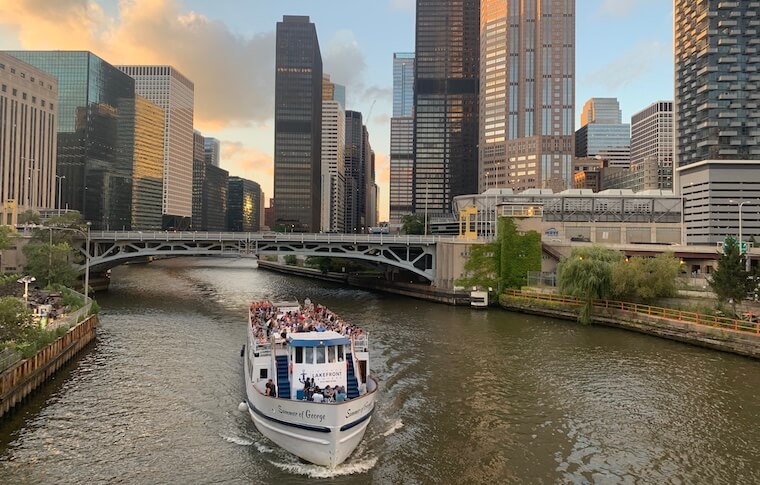
On the water, the city sorts itself into eras, and the fire draws the first hard line. You see a pre-fire survivor like the Pumping Station, then, a few blocks down, the stout 1880s and 1890s Chicago School, then the tall, thin river set of the 1920s, and finally glassy postwar and contemporary towers. Each family answers a code problem born in 1871.
Consider the Rookery. Completed in 1888 by Burnham and Root, it holds an iron frame inside thick, fireproofed walls. The light court glows white, remodeled later by Frank Lloyd Wright, but its bones speak about incremental change. You can stand on deck as the guide explains how early frames hid behind masonry because public trust still favored visibly solid walls after the fire. Over time, as codes matured and insurers gained confidence, architects pushed more glass outward, and curtain walls took over.
Or take the Auditorium Building, finished in 1889. It reads heavy, Romanesque, almost fortress-like. That is not only style. Thick walls, robust vaulting, compartmentalization, and limited wood made sense in a city still anxious about flame. The building’s mixed use, hotel and offices wrapped around a performance hall, reflects economic realities of the era, but the way it is put together shows an engineer’s eye for firesafe geometry.
The Reliance at State and Washington, gleaming and delicate, shows how quickly attitudes shifted. Its terra cotta cladding is a fire chicago river boat tour jacket over a metal frame, and the glass bays flood the interior with daylight. Insurance underwriting and fire codes had matured enough by the 1890s to allow architects to be honest about structure and still keep risk in check.
This kind of reading extends to newer towers. When you see the stepped crowns and setbacks of interwar giants or the clean lines of Miesian modernism stretching along the river, remember that codes still reflect that nineteenth century shock. Fire stairs, compartmentalization, noncombustible floors and walls, sprinkler systems, and sophisticated detection are all present-day echoes.
How boat tours teach the city through angles and edges
It is not just what you see, but how you see it. River tours put you at the waterline, which exaggerates certain forms. Terra cotta units look larger, glass curtains more diaphanous, and bridges more mechanical. Guides use that vantage to pull out lessons a sidewalk stroll would miss. When a docent leans you back to look up at the NBC Tower and then spins the narrative to the Wrigley Building’s terra cotta, the segue has a purpose. It ties fireproof materials to later aesthetics and to branding decisions, like why a chewing gum company dressed its headquarters in a bright, scrubbed skin.
On a loop under the Wells Street Bridge toward the North Branch, a guide might slow to point out how the river acts as a datum. You can line up the early steel frames against late twentieth century glass boxes and talk about how the fire planted both suspicion of combustible materials and a long civic habit of taking building safety seriously. Even the riverwalk itself, with its terraces and planters, has details written by code, material science, and maintenance logic that assumes winter, salt, crowds, and yes, the non-zero chance of a fire emergency.
What to listen for on the water
- A timeline that ties the 1871 fire to the 1874 South Side fire, then to the 1870s and 1880s fire limits and code changes.
- Materials named with purpose, especially brick, stone, iron, steel, clay tile, and glazed terra cotta, and how each answered a risk.
- Contrasts between load-bearing masonry towers like the Monadnock and steel-frame curtain wall buildings like the Reliance.
- The role of bridges in spreading the fire, then how iron and steel bascule bridges reversed that weakness.
- Myths addressed briefly, especially the O’Leary story, with the focus returning to conditions and systems rather than blame.
Trade-offs and what the fire did not do
A sober tour also admits limits. The Great Fire accelerated, but did not invent, the skyscraper. Elevator safety brakes, steel manufacturing, and office market demand were already in motion. New York, which did not experience a single city-defining fire on that scale in the late nineteenth century, built high for similar reasons. Chicago’s difference lies in speed, cohesion, and a pragmatic culture shaped by the shock of 1871.
There are aesthetic trade-offs too. Codes that emphasize compartmentalization and noncombustible construction can push designs toward repetitious plans if not handled with care. Early steel frames needed thick fireproofing that reduced rentable area, which architects balanced with bigger windows to maintain light. Terra cotta promised fire resistance and easy washing, but joints, anchors, and glaze maintenance became long-term headaches. Walk around after a rainstorm and you can see hairline cracks and replacement panels where anchorage corroded. With the benefit of time, you learn that every fire solution has a maintenance cost, and the best tours mention those realities.
The second act: planning and civic order
Rebuilding after the fire brought urgent needs into focus: firehouses spaced rationally, better water pressure, cisterns and hydrants, and a professionalized fire department. The city also doubled down on wide streets in the Loop. Some ideas that people assume came from the fire, like the 1909 Plan of Chicago by Burnham and Bennett, arrived decades later, but they carry a moral that the fire made popular. Order matters. Sightlines, traffic flows, and open spaces do more than delight the eye. They make a city safer and easier to defend against catastrophe.
From a boat, that lesson hides inside the diagonals and the setbacks. The way Wacker Drive steps along the river is as much about moving goods and people efficiently as it is about framing water. When a docent talks about the river reversal in 1900, sending wastewater toward the Mississippi instead of Lake Michigan, you are hearing a cousin of the fire story. It is the same city deciding that infrastructure cannot be shrugged off as an ugly necessity. It must be redesigned at scale so future architectural cruise chicago shocks do less damage.
Practical advice for choosing and using a tour
If you are serious about understanding the fire’s imprint, choose a tour operator that prioritizes trained docents and a pace that allows narrative depth. The Chicago Architecture Center’s river cruises are well regarded for that reason. Early morning trips let you see textures in softer light, which helps when you are looking for masonry bonds or terra cotta seams. Late afternoon rides build drama as the sun drops behind the river canyon, which can make steel frames and glass read differently. Sit near the centerline of the boat if you want balanced views to both banks, and do not be shy about asking guides to connect a building they just described back to the fire logic. The better ones will relish the chance.
Dress for wind, even on warm days. The river can be ten degrees cooler than the streets above, and you will miss details if you only think about getting back inside. Bring a small pair of binoculars if you are the type who wants to see anchorage plates or terracotta units up close. And if you care about the fire story, skim a short history before you go. It will make the on-water lesson feel richer and help you ask better questions.
Beyond the boat, where the fire still whispers
Street-level walks add layers. Step into the Rookery’s light court and read a room meant to tame daylight and risk. Visit the Chicago Water Works on Michigan Avenue and let the limestone block catch your fingers. Walk the block faces around the Monadnock and feel how thick walls compress sidewalks, a design decision rooted in a desire for safety that also shaped the street. These experiences ground what you heard on the river.
Neighborhoods hold traces too. The boulevard system that rings parts of the city, envisioned before the fire chicago architecture tour and expanded after, acts as both amenity and buffer. It did not stop the 1871 flames, but the idea that parks and wide streets can slow catastrophe survived and flourished. In some pockets on the Near North Side you will find late nineteenth century cottages and small flats whose brickwork and shallow rooflines reflect a generation’s anxiety about embers flying on a dry wind.
Why the story stays central
Most cities have a disaster they carry in their bones. Chicago’s is unusually architectural. That is why the fire is not just pageantry on a tour. It is a guide to how the place decided to function. When you pass the site where the river kinks near Wolf Point and the guide narrates the rise of steel frames, you are not hearing a random collection of facts. You are listening to a chain of cause and effect. Materials changed. Codes changed. Insurance changed. Bridges changed. Attitudes toward maintenance and public works changed. The skyline is those changes written in stone, steel, and clay.
Chicago would have built tall even without 1871. There was too much demand, too much money, and too much ambition for it not to grow up. But the fire made the city into a laboratory, and the river is the lab bench where you can line up the specimens and compare them. That is why these tours work so well. You do not have to imagine the impact. You can see it, from limestone survivor to glazed terra cotta to modern glass, stitched together by water that once carried flame and now carries the lesson.
Tours & Boats Architecture Tours 900 S Wells St Chicago, IL 60607 ph: (312) 858-6955 https://toursandboats.com