How Chicago Architecture Tours Tell the Story of the City
River wind, steel, ambition, and a second chance after ash. If you spend a day on the Chicago River listening to a seasoned docent, you hear all four in the buildings that crowd the water. The tour is never purely about cornices or curtain walls. It is about a city that had to remake itself, that learned how to stack work and culture into the sky, and that keeps renegotiating who gets to claim the best light along the river. Architecture tours in Chicago are some of the most direct storytelling tools the city has, with each neighborhood and vantage point changing the plot.
What the river teaches in ninety minutes
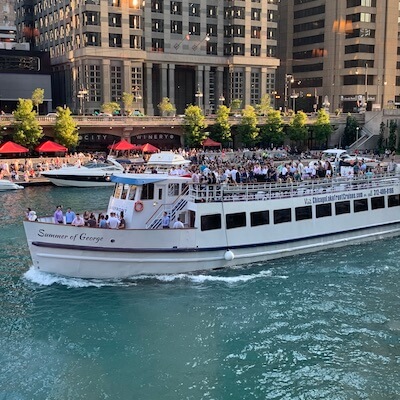
Even if you live here, the first time you take one of the chicago architecture boat tours you feel a shift. The river was once an industrial trench, reeking and utilitarian, engineered to carry waste away from the lake. Sitting on a boat now, you move through plazas where people eat lunch, kayakers weave between hulls, and you see glass that once mirrored smokestacks now reflecting trees. That change is not just aesthetic. It is a timeline of public works and private bet, starting with the river reversal in 1900, which transformed commerce and public health, and continuing through the 1990s cleanup that opened the door to riverside parks and residential towers. Docents know how to compress that into a few crossings.
As you pass the Merchandise Mart, a 4 million square foot block that once boasted its own zip code, you hear about centralized retail power in the 1930s and how it has morphed into design showrooms and tech space. The conversation at Marina City is never just about Bertrand Goldberg’s corncobs, evocative as they are. It is about urban life after white flight, about building high rise housing on the river in the 1960s with a mix of functions so people could live downtown again. Later, a glance at 333 Wacker and its green curve prompts a story about the 1980s and a city in competition with Sun Belt regions, trying to signal optimism without sacrificing Midwestern reserve.
On a single cruise you can cover a century and a half of attitudes toward work, light, water, and what it means to be seen. The skyline becomes a record, visible in profile.
Fire, steel, and an appetite for height
Any Chicago architecture tour, on foot or by boat, touches the Great Fire of 1871. Not because every myth is true, but because the disaster forced a rebuild at scale. Pink granite curbs in the South Loop still carry the heat scars. Guides often pause there, one hand on the stone, to talk about materials and codes. Brick and stone rose where timber burned. Then came a more important leap, the one that made Chicago a laboratory: steel.
William Le Baron Jenney’s Home Insurance Building, often called the first skyscraper, went up in 1885. Its metal frame let walls become skin rather than structure. Add the safety elevator, a forgiving soil that supports caissons sunk to bedrock, and a business culture comfortable with new methods, and you have a place willing to test height as a solution. The Rookery and Monadnock are field notes from that era, still legible as you walk inside and look at where weight transfers and daylight pools.
Burnham and Root, Holabird and Roche, Adler and Sullivan, and later SOM, C.F. Murphy, and Studio Gang, write in different dialects of the same language: efficiency, light, and a response to lake wind. On tours, you feel those shifts in your body. Stand on Wabash near the elevated tracks and you hear Adler’s acoustical sensibility become Sullivan’s ornament. Climb a stair at the Rookery and the iron sings under foot, then it opens into Wright’s light court, a layer of gilded restraint over robust structure. The city architecture tour never froze in a single style. It iterated.

The plan that still whispers from the grid
If you look at the lakefront from Museum Campus on a clear morning, the words from 1909 come back: make no little plans. The Plan of Chicago, drafted by Daniel Burnham and Edward Bennett, is often summarized into postcards - broad boulevards, a continuous public lakefront, a radiating network that the grid could hook into. On tours, the plan appears less as doctrine and more as a set of deliberate habits. You see it every time you walk a block east and find the sky open to water. The lakefront parks, protected by a simple sentence about keeping it forever open, free, and clear, compress the city and the lake into a single public room.
You also see the plan’s compromises. The radiating streets that were meant to soften the grid only partly materialized, which means traffic and trains work in decisive lines rather than gentle diagonals. On the river, where the plan’s civic centers are hinted at but not fully formed, you find a patchwork of plazas that developed over time. Good guides do not pretend the plan solved the city. They show where it still nudges decisions and where it gave way to speculative cycles.
Stories embedded in stone, brick, and glass
A tour that moves beyond a greatest hits reel will stop for textures. Terra cotta at the Fisher Building was not only ornament. It was fire resistance dressed like lace. Prairie School textiles inside the Auditorium are not nostalgia. They are part of a holistic system meant to let eyes rest while ears work. On a cold day, a docent with a key might take you into a lobby you have passed a hundred times and suddenly you see labor and craft in the tile patterns, many of them laid by immigrant hands at wages that can only be explained in the context of the day’s economics.
Take the Carbide and Carbon Building. Its black green facade and champagne cap read as a Prohibition era wink, which is a fun legend for any tour, but the reality is more layered. The Kerns used a polished black granite base and a dark green terra cotta shaft to signal permanence in uptake for a chemical company headquarters. The gilded top was as much about visibility from Grant Park as it was about indulgence. If a guide is careful with facts, you get both the myth and the credible history and you leave with a sharper eye for how marketing and truth braid in every era.
Why neighborhoods matter as much as the Loop
The city is not only its core. Walk a stretch of Prairie Avenue and you hear about the era when industrialists preferred to live just south of downtown, near their plants and rail yards, and how the corridor emptied out when wealth moved north along the lake. In Bronzeville, greystone two flats and small commercial buildings carry the arc of the Great Migration, a shift that brought music, churches, and Black enterprise into the city at scale. A good tour along 47th Street might show you an old bank building converted into a community arts space. The stone is the same, the program changes, and the message is that architecture holds memory but can be pressed into new service.
Pilsen adds another register. Murals face the street on brick walls meant for warehouses and corner shops. You can stand at 18th Street and Peoria and feel how adaptive reuse keeps industry bones working while the tenant mix changes quickly. With every conversion, questions follow. Who benefits from the investment. What counts as preservation - facade, volume, or the social life that used to happen on that block. Tours that make space for those questions, without sermonizing, stay honest and feel more Chicago than a folder of facts.
Urban renewal, resistance, and the scars you can still read
The 1950s and 1960s are often narrated by photographs of ribbon cuttings under gleaming modernism. The built reality cut both ways. State Street got widened and simplified, then decades later needed to be rescued from an overcorrection. Public housing was built at unprecedented scales and densities, then failed under the weight of policy choices, economic segregation, and an underestimation of maintenance needs. You can trace where the expressways sliced through neighborhoods by how the light changes near the ramps, and you can still find storefront churches that grew along those new edges.
Inside this history, you find groups that said no and made it stick. The campaign to save Glessner House in the 1960s, kept alive by passionate volunteers and architects who understood its importance, can be read as the moment the city learned to hold onto the best of its past without turning into a museum. After that came a thicker layer of local landmarks, often protected not because a building was pretty but because it held a story the city did not want to lose. When a tour lingers at these places, you hear the relief.
The river’s latest chapter, and who gets a front row seat
Today’s river is green by more than dye once a year. The Riverwalk stitches together segments into a public path that has to thread past private decks and loading docks. Any guide working that route has to navigate etiquette along with facts. The development on Wolf Point and the trio of towers at Lakeshore East are part of a twenty first century urbanism that uses public amenities to unlock private value. That is not simply a critique. Managed well, these exchanges can push real investment into public space. Managed lazily, they feel like a velvet rope gently pressed against your chest.
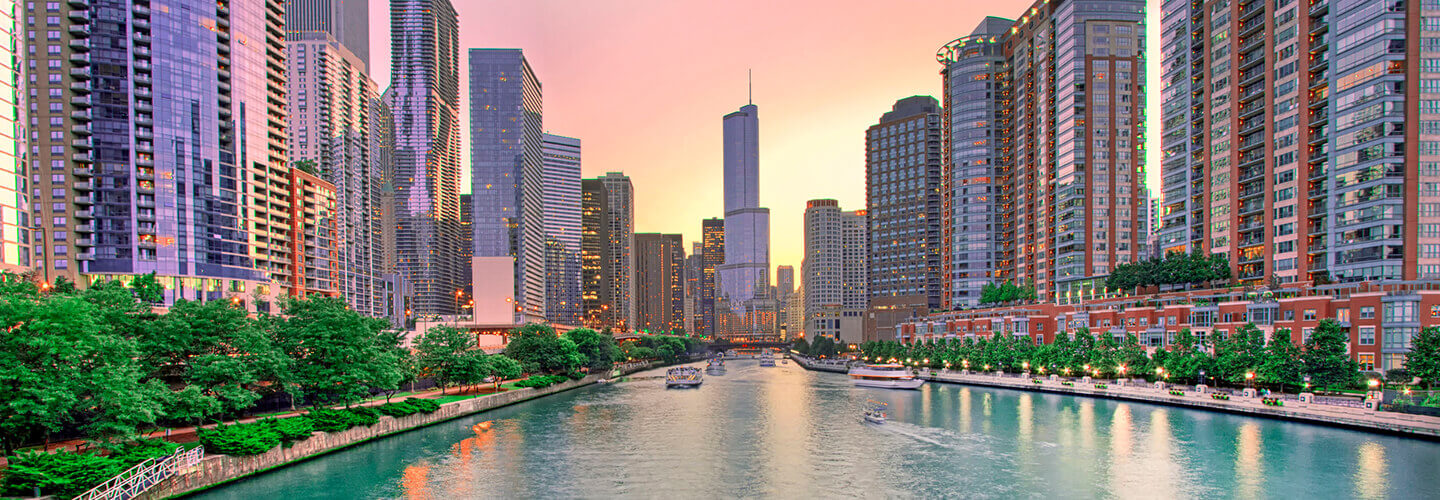
A river cruise draws lines between these outcomes. At 150 North Riverside, the building’s slender base and tuned mass damper are feats of engineering on a challenging long and narrow site, and the plaza became one of the most pleasant places to sit by the water. Next to it, older properties show how to retrofit flood controls and improve public access without losing the workaday character of a river meant to move goods. In high water seasons, the river reminds everyone who is in charge, and you cannot fully understand the new river without hearing about locks, gates, and flood tunnels that were sized for storms half a century ago. Tours that add this infrastructure layer make the place more legible.
Craft, code, and comfort: the details that decide how buildings feel
Most visitors remember silhouettes and stories. What stays with locals who take several tours is how docents talk about comfort. Double glazed low e glass was not a stylistic flourish. It is a response to lake effect winters and brutal summer sun. Setbacks are not only zoning theater. They create layers of wind protection that make a plaza usable in April rather than June. Historic masonry is not only a heritage asset. It is a thermal mass that plays differently than a modern curtain wall and can make a narrow street feel secure on a February afternoon.
Listen for the talk about accessible entrances that respect landmark status, and fire stair widths that grew with code changes. You start to notice how a retail frontage works when a doorway is slightly recessed, or when lighting avoids glare against the river at night. Tours that respect comfort, safety, and craft lift the conversation above style and into lived experience.
When the train becomes a moving balcony
Not every story needs a ticketed tour. Stand on the platform of the elevated tracks and ride the Brown Line between Merchandise Mart and Armitage, and you get a compressed education in cornices, bay windows, rear porches, and how brick ties a block together. The curve near Sedgwick gives you a view of Goose Island that no river cruise can. Winter makes everything crisper. You see steam lift from vents and watch how new infill tries to speak the language of its neighbors without copying their grammar.
Self guided tours that ride the train or follow the 606 trail let you feel the tempo of the city. Stops line up with corner taverns, schools, and churches. Rails once used for freight now carry runners and families on bikes. The architecture in these places is not meant to be iconic. It is meant to work hard, last, and be flexible. That is a Chicago value as much as a formal style.
Choosing the right tour for what you want to learn
- If your time is short, pick a river cruise run by a nonprofit or a company with trained docents. Ninety minutes covers the core narrative with room for questions.
- If you want intimacy with materials, take a walking tour that enters lobbies and arcades. You will trade breadth for interior access.
- If you are curious about social history, look for neighborhood tours in Bronzeville, Pilsen, or Uptown that pair architecture with migration, music, or labor history.
- If you are drawn to contemporary design, book tours that highlight post 2000 projects along the river and in the West Loop. You will hear about sustainability, code evolution, and adaptive reuse.
- If you have kids, choose routes with frequent rest stops and indoor options. Lobby heavy tours work well on cold days.
These options overlap. The best days stack a morning river cruise with an afternoon walk on State Street or Michigan Avenue south of the Cultural Center, where you can duck inside and out as weather shifts.
How guides use buildings as characters
Good docents treat buildings like people in a cast. The Wrigley Building plays the extrovert with its white terra cotta, confident on the bridgehead, while Tribune Tower sits a touch more formal, carrying stones from global sites in its base like souvenirs pinned to a lapel. Aqua reads as the dancer, its balconies turning wind into rhythm. The Civic Opera Building plays the impresario, a private enterprise built for culture, backed by an industrial fortune. Willis Tower, still called Sears Tower by many locals, is the stoic in black, a bundled tube that taught the world a new structural way to get to 1,450 feet with grace in the wind.
When a guide gives the Carbide and Carbon Building a sly grin or describes the Inland Steel Building as the office worker who puts all the messy files into an external cabinet so the desk looks clean, you start to track how engineering decisions become personality. That stickiness helps memory. Weeks later, you will remember that Inland Steel put structure and services on the outside to free up an open plan, because you liked the character sketch.
Preservation versus progress is not a simple fight
Chicago has lost masterpieces. The Garrick Theatre and the Chicago Stock Exchange are gone, their loss emphasized in any tour that loves Sullivan. That grief did its own work. It birthed a stronger preservation movement and inspired salvage practices that gave ornaments a second life in museums and galleries. At the same time, the city has built vigorously, and much of that building pays respect without tilting into fakery. Tour talk often returns to this tension. Keep the skyline honest, let the streets work for people now, and avoid freezing a neighborhood in amber just because it photographs well.
Adaptive reuse has moved from exception to standard practice. Old warehouses in the West Loop now hold corporate headquarters and restaurants. The rules of transformation require judgment. Cut too much, and you lose a building’s logic and its civic contribution. Cut too little, and you stay stuck in nostalgia that does not serve current needs. Guides who have watched these projects over years talk about phasing, financing, and community feedback as much as cornice lines. The result is richer than a simple yes to old or new.
The way water, wind, and light set the pace
Architecture here has to negotiate boat ride chicago with the elements. A guide will point to how a tower’s corners are chamfered to manage gusts that come in off the lake, or how a riverfront facade steps to break up long fetch winds. The city is famous for winter, but summer can be swampy without breezeways and shade. Look at the canopy design along the Riverwalk or the planting choices that hold soil during floods. That is not just landscape work. It is a long conversation with the river and lake that buildings join.
Light matters in a northern city. Many older offices tucked perimeter offices with interior clerks under glass transoms so daylight reached deeper. Modern office floors often achieve the same effect with slender cores and expansive glazing, controlled with coatings and frits. When you take a tour at dusk, you see which designs understand the golden moments and which ignore them. Questions about energy performance follow. The best guides parse between a marketing label and a certification that required real work.
What a winter tour says that summer cannot
Most visitors come between May and October. If you want to hear the city whisper, go in January. Cold changes sound. Lobbies feel different when you move from nine degrees and wind into air held at seventy. Stone smells sharper. Docents in winter become masters of timing, tucking a story into a warm stop, then moving briskly across a plaza with a fact that does not ask you to stop and stare. The river steams, and you finally understand why bridges are machines. That lesson lands more physically than any slide in a lecture.
Another winter advantage is access. Fewer crowds mean you can stand in the middle of a lobby and swivel without knocking someone’s coffee. You can linger on a stair and feel its use patterns. Tours in cold months tend to draw locals and repeat visitors, which changes the questions. Instead of what is the tallest building, you hear how this neighborhood looks different since the last decade, or which small detail you have never noticed. You get better stories because the room holds more shared history.
The economics under the ornament
Architecture is not only design. It is financing, materials, labor, and long tail maintenance. Tours that open this box feel more grounded. A docent might explain that terra cotta was chosen because it was cost effective for fire proof cladding, not only because it meant elaborate detailing. Or that a glass specification changed late in design because commodity prices moved and the developer chose a path that kept warranty protection in place. On a neighborhood tour, you might hear the candid truth that a beloved corner building sat empty for years because its lot size and zoning made a project pencil only with incentives.
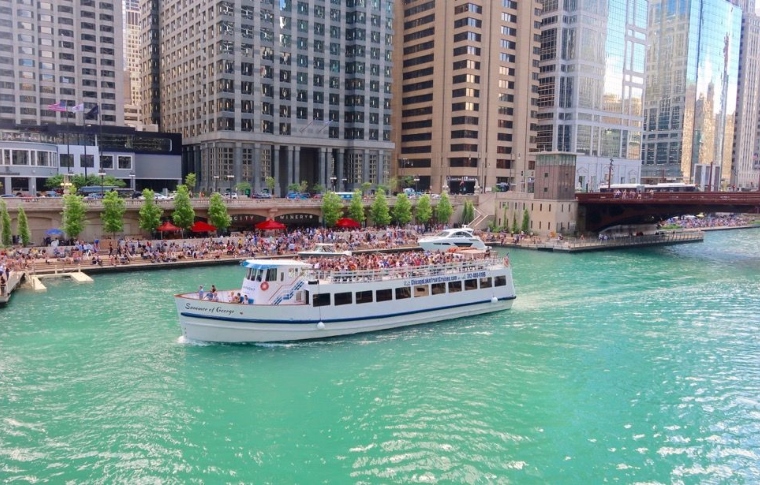
These are not cynical notes. They are the reality of a working city. When a guide shares how tax increment financing helped a streetscape, or how a local alderman pushed for a setback so a bus stop would be less chaotic, you get the full stack: policy, economics, and form. That stack builds trust between the tour and the street.
Practical ways to see more with less walking
- Boat, train, or foot each change what you learn. Boat tours give you massing, river history, and a smooth sequence with seating. Trains show the alleys, rear porches, and the lived grain between icons. Walking tours let you feel materials, touch railings, and use interiors to understand structure.
- Pair a river tour with a short walking route like the Historic Michigan Boulevard District, which has frequent indoor stops.
- For families or groups with mobility concerns, look for tours that state restroom access and elevator availability in advance, especially in winter.
- If you want quiet photos, catch the first departure of the day or a weekday late afternoon, avoiding weekends in peak months.
- Bring a small notebook. You will remember more if you write down two building names and one number, like a height or a year, right as you hear them.
These small tactics change the shape of your day. They also make the stories stick.
What the newest work says about the next chapter
Recent projects lean into environmental performance and social space. The Chicago Architecture Center itself, sitting under a SOM designed riverfront tower, uses models and views to teach how cities come together. Riverline and Southbank developments make room for plantings and paths while carrying thousands of residents into formerly industrial land. The Old Post Office, once a cavernous liability spanning the expressway, now holds offices and a rooftop park, a case study in how to pull a building back into the city without sanding off its history.
On tours that include Studio Gang’s work, you hear about how balconies, setbacks, and massing respond to wind and create social life outdoors. At Northwestern’s lakefront campus, you can see how a building shapes waves and frames the horizon without pretending the lake is a decorative pond. Sustainability on these tours is not a checklist. It is a design conversation that keeps energy, water, and comfort in the same sentence as form.
Why these tours feel true to the place
Plenty of cities show you fine buildings and sweeping views. Chicago adds the feeling that the city and its guides are still working the problem in front of you. The grid, the lake, the river, and a set of unflashy values about how buildings should perform under pressure give the tours a practical backbone. Stories do not float. They anchor into materials, policy shifts, weather, and money. That honesty plays well with visitors and locals who can spot fluff.
The other reason these architectural boat cruise chicago tours work is the variety of voices. You hear retired engineers, artists, planners, and long time residents who have watched cranes rise and come down, who know which glass reads green at noon and which reads silver after a storm, who have lived through debates about bike lanes on Dearborn and the right way to light a bridge. They bring their own weathered take to the script. Combined with the city’s habit of reinvention, that makes each tour feel current, even when you are staring at a building that predates your grandparents.
Take two hours to ride the river, then put your shoes on the sidewalk and dig into a block you have only ever seen from a car. Chicago will start talking to you through its brick and steel. Once you hear it, you notice how the story keeps rewriting itself, usually for the better, occasionally with the same old mistakes, always with an eye on the water and the sky.
Tours & Boats Architecture Tours 900 S Wells St Chicago, IL 60607 ph: (312) 858-6955 https://toursandboats.com