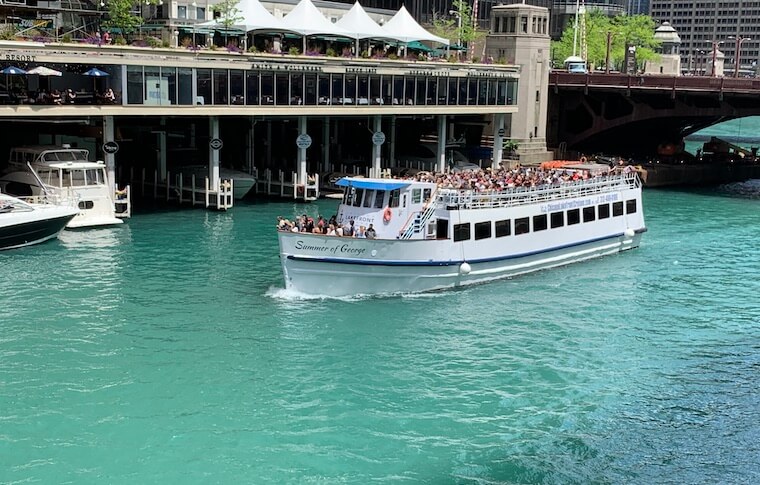
How Sunset Architecture Tours in Chicago Change the Skyline Experience
Chicago wears light like a second skin. The same façades that seem businesslike at noon shift into something lyrical by evening, their edges softening as the sun drops behind the West Side and the lake sky migrates from brass to coral to cobalt. If you have spent time on a midday river cruise, you know the basics of the skyline. A sunset architecture tour puts that knowledge in motion. The river becomes a mirror, glass towers mellow, and brick gains a low, warm glow. The city that looks fixed on postcards suddenly feels alive.
What changes when the sun tilts low
Skyscrapers are machines for gathering and throwing light. During the day, the river corridor behaves like a canyon, with high reflectance and sharp contrasts that often force your eyes to squint. At sunset, light arrives from a shallower angle. It rakes across ornament, finds bronze spandrels that were invisible at noon, and turns east facing glass into giant lanterns. The physics are simple, but the visual effect is startling. Low angle light lengthens shadows, which makes moldings and recessed joints read more clearly. You can trace the setbacks on Art Deco towers from block to block. The textures become legible.
The color temperature shifts too. Chicago’s river mostly runs west to east through the central district. Late day light filters through mid rise neighborhoods to the west before it strikes the Loop, warming as it goes. A cool white on blue palette becomes amber on teal. If you go out on a clear evening in June, you get a long golden window, often 20 to 40 minutes, followed by blue hour. That second phase can be even better for reading the skyline’s silhouette. Glass darkens, interiors turn on, and the underbellies of bridges pick up pools of light that help you understand how the city knits its riverfront.
Weather complicates the story in helpful ways. Haze softens steel edges. Broken clouds create moving spotlights that play across Merchandise Mart or the stepped crown of the Carbide and Carbon Building. After a storm, the air over the river can feel scrubbed clean. On those nights, reflections snap into high contrast, especially at the curve of 333 Wacker Drive where the whole western sky becomes a painting on green glass.
The river tour that teaches you to look again
Most sunset routes follow the familiar sequence through the Main Branch from Michigan Avenue to Wolf Point, then fan into the North or South Branch. The sequence matters because your eye learns patterns along the way.
You start under the trunnion bascules of the DuSable Bridge. At rush hour, the bridge decks hold their own drama, but at dusk the eye falls instead to the limestone of the boat tour chicago architecture Wrigley Building and Tribune Tower. Wrigley’s terra cotta modulates from chalk to honey, revealing the crispness of its pilasters. Tribune’s Gothic revival tracery, which can feel busy in midday glare, becomes readable parchment under slant light. Watch the shadows climb up the buttresses. The effect is slow and theatrical.
Past Columbus Drive, the view opens to the confluence where the river splits. Three architectural eras sit in a visual architectural boat tour conversation. Marina City’s scalloped concrete picks up small beads of light in the parking decks, like a dim constellation. The 333 Wacker curve acts as a canvas for the sunset itself, a phenomenon that daytime tours can describe but not demonstrate. Behind it, the glass shafts of the twin 110 North Wacker and 150 North Riverside stack reflections into a deep weave. At daylight they act like periscopes. At sunset, they fall into richer tones, their edges clarified by internal lighting.
On the North Branch, the textures remain mostly industrial until you hit the old Montgomery Ward complex. The masonry there loves warm light, and you begin to feel how the city still carries traces of its warehouse scale. On the South Branch, Sears Tower, now Willis Tower, reads differently once the sun slides past its bulk. The tower’s stacked tubes swallow and then emit light as floor plates light up in sequence. Later in the season, when the sun sets farther south, the tower’s dark bands can appear almost paper thin against a bright sky, an inversion that strips the building to its form.
Some sunset tours angle through the lock at the river’s mouth to put the skyline against the lake. If yours does, the best moment often arrives ten to fifteen minutes after the sun drops, when the gradient of the sky tightens and the city becomes an electric diagram. From the east, you notice what you can miss inside the canyon. The step backs, the way certain towers hold to Burnham’s axial logic, the mischief of postmodern crowns like 77 West Wacker. You can measure the relative heights without the foreshortening of the river curves, and you see how St. Regis Chicago, with its stacked frustums, modulates its color in different glass formulations that read like distinct blocks of twilight.
The guide’s voice and why it lands at dusk
Chicago architecture boat tours live or die on the guide. The best docents read the light and shift their timing. Details that can feel dry at noon find a natural hook in the evening. When you can point at a cornice igniting on the Rookery or show how the tonality changes across successive panels on a modern curtain wall, theory falls away and observation takes over.
Sunset also makes it easier to collapse history into a chicago architecture river tour single frame. The Great Fire is not just a story about building codes. It becomes legible in the grain of masonry that rose afterward, in the red brick along the South Branch. The 1909 Plan stops being a diagram and becomes visible in the way the riverwalk is designed as a sequence of rooms that catch different flavors of light. Miesian minimalism, which can appear severe, takes on a humane glow when you can see internal structure through active office floors, then compare that to postmodern ornamental crowns as they light up.
The pacing changes too. On a bright day, docents fight wind and glare, and visitors spend time squinting at phone screens. At sunset, eyes are up. People share pointing gestures more, call out the faint green in the Carbide and Carbon spire, or the slow fade on Aqua’s balcony waves. You get a more social form of looking. For a city that prides itself on being built by workers rather than magicians, that communal attention feels right.
Specific buildings that transform after 7 pm
Some towers earn their reputations at golden hour. Others reveal a surprise.
-
333 Wacker Drive: The curved façade becomes a pure reflector. On some evenings you can read cloud bands like brush strokes across its green skin. Architects love to talk about context. Here, you can point to it.
-
St. Regis Chicago: The tiered volumes shift tone from block to block because of different glass tints. At sunset, that reads as a vertical gradient, like stacked pools of water absorbing light at different depths.
-
Aqua: The undulating balconies generate shadows that move with the sun. Late day light accentuates the ripple, then blue hour flattens it, giving you a two act show in twenty minutes.
-
Carbide and Carbon Building: The dark green terracotta soaks up warmth. As the gilded crown picks up the last rays, it looks handmade, almost like jewelry instead of a skyscraper cap.
-
Willis Tower: The tower rarely glows, it absorbs. At dusk, its antennae draw the eye, but the better read is on the horizontals, which define the tube stacking. Watch as interior lights build from the lower banks to the upper floors, turning a solid mass into a perforated one.
That list could go longer, but some pleasures are better discovered in the moment. Stand on the aft deck as your boat drifts past 150 North Riverside, and you may notice the trussed belly catching an orange sliver. Look at the circles of Marina City and count the headlamps as drivers spiral home. The building becomes a clock you can read without numbers.
Daylight tours have their virtues, but sunset widens the lens
Not everything improves at dusk. If your priority is studying structural systems in crisp relief, midday light can be the right tool. You will see more detail on cast iron columns, and you can photograph clean elevations without flare. Some riverbank plantings, like the floating gardens near State Street, show their textures better in direct light. And if your guide is charting a tight survey of styles, pauses can be shorter in the evening because crowd noise picks up along the riverwalk.
Sunset trades fine grain clarity for atmosphere and narrative. Colors deepen, and crowds on patios become part of the story. You sense how the city is used. You notice how different buildings welcome or repel evening life. Lobbies that glow, terraces that hold people, rooftops that activate only when the sun slides down. A daylight tour teaches you the alphabet. A sunset tour nudges you to form sentences.
The sensory layer, not just the view
The soundscape changes with the clock. After office hours, you hear more laughter from the steps below Michigan Avenue, saxophones near Marina City, clinks of glass at City Winery on the riverwalk. The engine thrum of the tour boat fades once you find your listening level. Diesel carries on the water, but you quickly edit it out.
Smell surprises people. On warm evenings, the river has its own blend of mineral and organic notes, not unpleasant if the flow is steady. In spring, you sometimes catch lilac or crabapple along the walkways. Breeze direction matters. A light onshore wind from the lake cools the canyon by several degrees. Plan your layers with the water temperature in mind, not just the air on Michigan Avenue. Even in July, a T shirt can feel thin once the sun is gone.
Season by season, how sunset tells a different story
In June and early July, the sun lingers. Golden hour can stretch toward 40 minutes, and tours that start around 7:30 pm often give you both the glow and the first wave of city lights. Temperatures run comfortably in the 60s to 70s Fahrenheit on the water, though sudden lake breezes can drop that a notch. Crowds are spirited, and the river traffic bustles, but the energy feels open rather than frantic.
By late August, the angle of the sun begins to travel south. You can get dramatic cross light on the South Branch, which throws relics like the old grain elevators into unexpected relief. The city color palette warms. There are more oranges in the glass. Nights come sooner, which tightens the blue hour window to around 20 minutes.
October brings a different magic. The air clears. Skies often go high and hard, and the setting sun can punch color into façades that looked plain in midsummer. Jackets become necessary, and hands look for hot chocolate over cold beer. If your tour aligns with a clear evening after a cold front, the skyline outline can feel surgical. For those who like reading silhouette and proportion, this is a prime month.
Winter converts the premise. A 4:20 pm sunset in December means you can take a dusk tour, catch the lights, and still make an early dinner. The cold is real on the water. Wind protection becomes the priority, and some operators run enclosed or partially heated decks. Snow glare changes reflectivity. A fine dusting can make horizontal ledges pop on classical buildings, while glass towers dim and throw you back to the lit interiors as the main visual narrative.
Spring carries the widest variance. Some nights soggy and cold, others crystalline and mild. On evenings when clouds break late, the city can get that brief, ecstatic beam of light shooting down the canyon, a photographer’s gift that lasts three minutes if you are lucky.
The practical side of timing, tickets, and the right seat
Chicago architecture boat tours operate on reliable schedules during peak season, and sunset departures tend to sell out. If you have a fixed date with visitors in town, book a week or more in advance. Operators stage from several docks near Michigan Avenue, Ogden Slip, and Navy Pier. Travel time between them can surprise first timers. Bridges might be up for maintenance or traffic may slow you on Lower Wacker. Build a 20 minute buffer.
Seating strategy matters. Aft upper deck gives a steadier view without as much wind. Forward upper deck offers the thrill of first look, but you will turn into the breeze and may ride spray if the captain crosses a wake at the wrong angle. Lower decks, when open air, give you a cinematic frame under the bridge trusses. Photographers like standing near the rail with an unobstructed 180 degree sweep.
If your tour includes a lake segment, remember the lock can introduce delay. Ten to twenty minutes is common in busy seasons. It is a trade worth making for the full skyline profile. If you stay on the river, the payoff is intimacy. You read joints in masonry, hear the creak of drawbridges as they settle, and watch the city unwind at eye level.
A checklist to choose the sunset tour that fits your goals
- Route scope: River only for detail and storytelling, river plus lake for the wide skyline panorama.
- Guide format: Live docents from preservation organizations tend to emphasize history and design vocabulary. General operators often balance narrative with city trivia and entertainment.
- Seating and vessel size: Smaller boats feel more personal, larger ones provide smoother rides and more stable photo platforms.
- Duration: Dusk changes fast. A 75 to 90 minute window usually captures both golden and blue hours without rushing.
- Weather options: Ask about enclosed decks or flexible rebooking if storms threaten. Sunset light after rain can be spectacular, but lightning cancels play.
Each factor carries a cost. A lake add on might shorten time upriver where details are richest. A smaller boat can bring you closer to the bank but will roll more when wakes crisscross. Live guides shine when the light lets them point, but recorded spiels keep timing strict, useful if you want quiet stretches to take in the scene.
How to photograph the skyline at dusk without missing the moment
Smartphones are more than enough now. Their sensors can handle the wide dynamic range between bright sky and dark facades if you nudge settings. HDR modes help, but the real trick is restraint. Rather than snapping every bridge, wait for alignment. If your boat swings north and the curve of 333 Wacker catches the sky, anchor the frame, then let the reflection do the work.
A short list of tactics helps.
- Dress the hands: Thin gloves in shoulder seasons keep you nimble. Cold fingers make for shaky shots.
- Stabilize the body: Use the rail as a brace and exhale slowly as you tap the shutter. Night modes need a steady platform.
- Look for the handoff: Golden hour gives color, blue hour gives structure. Switch from wide shots to tighter details when the sky deepens.
- Embrace silhouettes: Against the lake, let the buildings go black and chase the gradient. It reads truer to the moment.
- Make one souvenir portrait: Turn the camera around when the light is kind. You will forget the angle of the sun on the Wrigley clock tower, but you will remember the people you shared it with.
You will miss shots. The boat turns, a couple steps into your frame, or a gust rattles your elbow as the perfect reflection settles. Do not sweat it. The city will give you another angle thirty seconds later.
Reading the riverwalk as a stage set
As the light lowers, the riverwalk becomes a string of rooms, each with its own personality. The marina plaza near State Street is lively with kayaks and a pizza slice held at a tilt. The theater district bend past Dearborn reflects marquee lights that pool on the water. Under the bridges, the coffers catch small cavities of brightness that rhythm the ride. You feel the engineering more at night because light edges mark joints and reveals.
This is a good time to think about how Chicago recast its river as a front yard. A generation ago, stretches of the bank were blank backsides. Now, stairs and terraces bring people to the water. At sunset, you can watch how that design decision reframes the skyline. Towers that once turned away now pour light onto the walk. The city learned to treat its reflection as part of its identity, and dusk makes that explicit.
The role of chance, and why no two sunsets match
Every great sunset tour features a small miracle that the operator cannot program. A lone boat leaving a V shaped wake that mirrors the stroke of cloud behind 300 North LaSalle. A flock of gulls marking the last orange band over the West Loop. The way the bronze on 155 North Wacker warms to match a stranger’s jacket in the foreground, tying human and building together in a blink.
Edge cases sharpen memory. If a storm line sits to the west, you may ride under a ceiling of violet and gray with a molten slit on the horizon. Glass towers stop reflecting detail and become sheets of polished metal. If wildfires far north push haze into the region, the sun may go red, and the skyline will look like a silhouette from an old print. Some evenings end with a soft fade, no show, just steady dimming. Those nights draw your ear more than your eye. You listen to bridge pins knocking, paddle strokes from late kayakers, and office HVAC units cycling as floors shut down.
Cost, value, and the honest trade
Sunset tickets usually carry a premium, modest in shoulder seasons and more pronounced in July and August. You are paying for scarcity, not distance, and for a timing slot that gives you two distinct visual experiences in one seat. If you care about architecture as a living practice rather than a museum of styles, that is worth the surcharge. You come away with a sense of how buildings perform as light changes, how public space collects evening life, and how a city can be built to face its river rather than merely span it.
If budget matters, look for late afternoon departures that slide into the first minutes of golden hour without wearing the sunset label. Standby lines can also work on weekdays. Operators do not like leaving seats empty, and weather forecasts that look grim at noon often soften by six. A poncho weighs almost nothing. Bring it, and you can take a chance others will not.
The quiet argument sunset makes for Chicago
The skyline here has never been a single era’s boast. It is a palimpsest. The river records that in its bends and bascules, and sunset gives you the clearest read. You see the argument between restraint and flourish, between structure revealed and story told in ornament. You feel the municipal temperament, pragmatic yet proud, in the way people use the steps, how they pause to watch the color drain from the sky, then head for the train without ceremony.
Chicago architecture boat tours are more than a survey. At dusk, they are an education in attention. The city shows you how light writes across matter, how time alters what you thought you knew, and how a shared hour on the water can make even residents look up in surprise. You step back onto the dock with the skyline behind you, and it is tempting to turn for one last glance. Do it. The towers change again with each minute you wait. Then walk into the evening, the image already adjusting itself in memory, warmer, deeper, and more your own.
Tours & Boats Architecture Tours 900 S Wells St Chicago, IL 60607 ph: (312) 858-6955 https://toursandboats.com