What to Know Before Taking a Boat Tour of Chicago Architecture
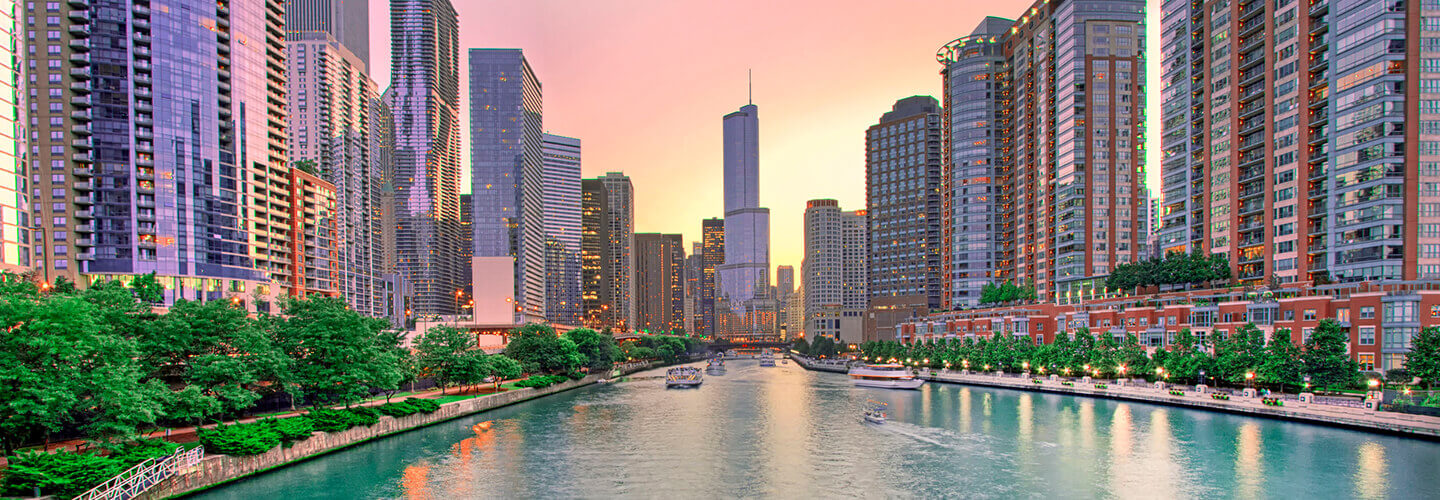
There is a moment as the boat slides past the river bend at Wolf Point when the entire city seems to open like a book. Rail lines and timber yards once dominated that confluence, but the view today is steel, glass, and ambition, stacked and mirrored in the river’s green water. If you have friends visiting, or if you have lived here for years and finally decided to play tourist, a Chicago architecture boat tour is one of the few experiences that satisfies both curiosity and delight. It gives you the backstory on the city’s skyline while floating through the infrastructure that made the skyline possible.
For a simple sightseeing cruise, you can show up on a sunny afternoon and hop aboard. If you want the best version of the experience, a bit of planning helps. The right operator, time of day, and seat can turn a good tour into the kind you talk about months later. Here is what matters, drawn from many laps up and down the Main, North, and South Branches with out-of-towners, architecture students, and at least one toddler who learned the word “buttress” before “broccoli.”
Picking an Operator: Similar Routes, Different Personalities
Several companies run architecture cruises on the Chicago River. The best chicago boat tour differences come down to narration style, vessel layout, and how deep the guides go on history and design.
The Chicago Architecture Center’s official river cruise, operated by Chicago’s First Lady, is the benchmark if you care about detail. Docents are trained through the Center, many have professional or academic ties to design, and it shows when they talk about structural systems instead of repeating a script. Tours run roughly 90 minutes, which is longer than most, and you feel the extra time in the pace. They rarely rush past Wolf Point Junction, Marina City, or the intricacies of bascule bridge engineering.
Wendella and Shoreline Sightseeing also run strong programs. Their boats tend to have a livelier atmosphere and more frequent departures. Narration covers the big hits, with good anecdotes about the river reversal, Great Chicago Fire myths, and the race to build the first true skyscrapers. Be honest about which style you will enjoy. If you want a comfortably academic tour, pick the Architecture Center. If your group includes a bachelor party and an aunt who asks for photo stops, a general operator will still show you the city well.
Most architecture tours stick to the three-branch river loop with an occasional run through the Chicago Harbor Lock to Lake Michigan. The lock adds a few minutes of hydraulic theater and the lake offers that postcard skyline view, but it shortens time upriver. Decide whether you want depth on the branches or a dash to the lake. If you want both, plan two tours on different days.
Price varies by season and time slot. Expect adult tickets to range from the mid 30s to the low 60s during the main season, with weekend afternoons usually at the top end. Children’s tickets are discounted, and groups may find deals at off-peak times.
When to Go: Light, Weather, and the Rhythm of the River
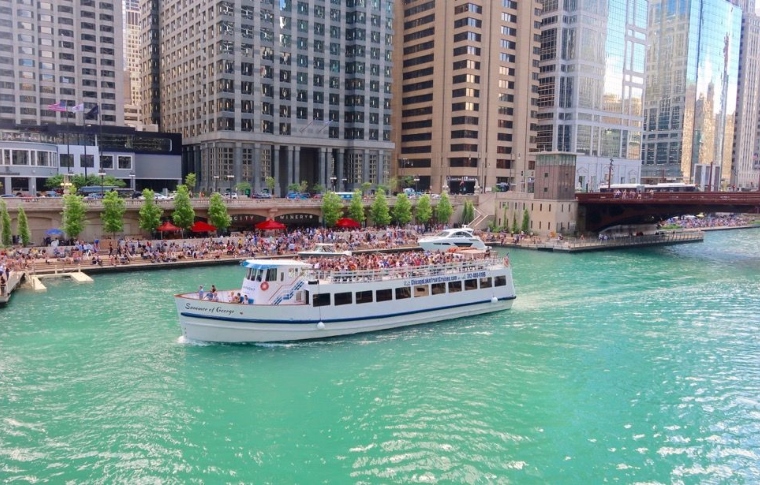
Chicago’s river tours run most days from spring through late fall, roughly April through November. A few enclosed vessels operate in the colder months, but winter schedules are slim and the experience is different when you cannot be on the open deck. If you have your pick of months, late May through June and September into early October usually balance milder temperatures with softer sunlight. July and August bring heat and haze, plus heavy weekend traffic on the water.
Time of day matters more than most people expect. Morning tours feel crisp and less crowded. Guides have quiet water and room to linger. Midday brings glare off glass, squinting into the sun, and busy docks, though the upside is a buzzy Riverwalk energy. Golden hour is the sweet spot. The facades at 333 West Wacker and the St. Regis take on color, while the Merchandise Mart and Tribune Tower gain shadow and relief. Night tours can be magical, with lit crowns and river reflections, but you lose some of the intricate reading of ornament and structure.
Two timing quirks can affect your day. On select spring and fall days, the city lifts downtown bridges to let sailboats move between winter storage and the lake. Bridge lifts usually start midmorning and move west to east. Tours continue, but captains may adjust routes or pause. It is worth checking the city’s bridge lift schedule if your date is flexible. Around St. Patrick’s Day, the river is dyed a saturated green and crowds swell along the Riverwalk. That weekend is festive, but expect delays and a party vibe that drowns out narration.
Plan to arrive at your dock at least 20 to 30 minutes before departure. The Riverwalk can be a slow shuffle on warm days, and some docks are tucked below street level with winding access. If you cut it close, you risk watching your boat push off as you jog down the last set of steps.
Where to Sit and How to See
Every seat claims to be the best seat. You can make a case for most of them, but the trade-offs are real. The upper deck gives you cleaner sightlines and fewer obstructions when you pan from the corncob curves of Marina City to the glass sweep of 333 West Wacker. It is also windier, hotter in full sun, colder in shoulder seasons, and the first to fill. If you burn easily or travel with someone who prefers shade, the lower deck usually has a partial canopy and windows that open. You will occasionally crane around columns, but you will be comfortable when the boat ducks under a low bridge with a deck sprinkler of roadway runoff.
Sit forward if you like to anticipate the next building before the guide sets it up. Sit near a speaker if you have any trouble with hearing. Many boats offer assistive listening devices if you ask before boarding, and some narrations include live captions on a screen. On a full boat, aisles become camera alleys. Take your photos, then pull back to your seat so others can catch the same angles. It keeps tempers down and views open.
If you love architecture boat tour to shoot, bring a lens that covers moderate wide to short telephoto. A 24 to 70 millimeter range on full frame works well. Anything wider distorts verticals, anything longer struggles when the boat turns and you suddenly need more scene. Lens hoods help cut flare from sun-struck glass, and a microfiber cloth is useful after a bridge mist or lake spray.

What You Will Learn Without Feeling Lectured
For all their differences in tone, most chicago architecture boat tours cover a core syllabus. They start with why Chicago looks like this. The Great Fire of 1871 cleared a path for new urban ideas, but the true accelerant was business and transit. The river and the rails made Chicago a distribution city that demanded tall offices and warehouses near the water. You hear about the early Frame and Masonry period, the breakthroughs with steel skeletons, and the way architects here leaned into new materials rather than disguising them as stone.
Bridges are the second thread. The operators call out bascule bridges, Chicago’s signature seesaw style, and you will likely watch one cycle if you are on the river during a spring or fall lift. Understanding the mechanics deepens your appreciation for how the river functions as a working thoroughfare, not just a scenic canal. You can still find rivets as large as walnuts along the trusses of the Wells Street Bridge. Many guides take pride in the elegance of those industrial details.
On to the greatest hits. The Merchandise Mart looms like a horizontal city, more than four million square feet of floor area, once the largest building in the world by square footage. Marina City curves inward as twin spirals, built to lure residents back downtown in the 1960s. 333 West Wacker bends to mirror the river it faces, a lesson in how form can honor site instead of fighting it. The Tribune Tower, with its global fragments of stone tucked into the facade, tells a story about media, identity, and borrowed history. The Wrigley Building sparkles in glazed terra cotta, as pristine after restoration as a fresh set of tiles.
Contemporary work now earns equal time. Jeanne Gang’s Aqua and St. Regis towers show how wind, sunlight, and urban wind patterns can shape a facade. SOM’s legacy runs through much of the skyline, from structural experiments to corporate towers that balance simplicity with intelligence. You hear Mies van der Rohe’s name more than once, often in the context of “less is more,” followed by a quick pointer to how that dictum actually plays out in the grid, the mullions, and the proportioning.
Good docents slip in stories that keep the facts moving. You might hear about a night in the late 19th century when the city reversed its river, engineering a flow away from Lake Michigan to keep drinking water clean. Or how the city’s freeze-thaw cycles punish decorative flourishes, which is why so many midcentury buildings read as crisp and stripped down compared to their East Coast cousins. The point is not to memorize a timeline. It is to leave the boat seeing downtown as a set of decisions under constraint.
River Conditions and Safety Without the Drama
The Chicago River is calm compared to open water. If you are worried about motion sickness, the odds are in your favor. The boat has a steady glide, interrupted by the occasional tug wake or sightseeing craft that thinks its horn is a personality. The only truly bumpy segment is the lock to Lake Michigan when it is busy. The rise and fall are slow, but currents and crosswinds can spark a bobble. If you feel uneasy in tight spaces, the lock walls are close, but the cycle wraps in under fifteen minutes most days.
Tours run in light rain. They cancel or delay for lightning, high winds on the lake, and rare mechanical issues. You will find life jackets onboard, generally in compartments near the lower deck or under bench seating. Crew members are trained on emergency procedures, and captains keep a watchful line through low bridges. Your role is basic awareness. Do not stand on seatbacks during bridge passes, do not let kids climb railings, and keep tote bags from tumbling into aisles.
Bathrooms are on board and better than average, especially on the larger ships. Lines tend to form in the first fifteen minutes. Go before departure, and you will skip the awkward shuffle while the guide introduces Mies.
What to Bring and What to Leave at the Dock
Many people overpack for an hour on the river, then wind up babysitting a bag. Keep it simple. A small water bottle is allowed by most operators, but check policies on outside food and drink. Most boats sell drinks, including alcohol, along with light snacks. If you bring a coffee, make it a lidded one, or the first bridge will nick the lid and tattoo your shoes. Sunscreen matters more than you think even on hazy days. A brimmed hat helps, as does a light layer that you can pull on when the river breeze lives up to its reputation.
Photography is welcome, tripods are not. Drones are a nonstarter. If you claim a rail spot for a panorama, rotate out when the guide switches to a new building. It is the unspoken pact that keeps strangers from becoming enemies at Clark Street.
Here is a short, realistic packing list that works in most seasons.
- Sunglasses and sunscreen, even on cool, overcast days
- A light jacket or scarf that blocks wind
- Refillable water bottle and a small snack if permitted
- Camera or phone with a cleaning cloth
- A small tote or crossbody bag that frees both hands
Accessibility, Families, and Mixed Groups
Most dock areas and many boats are accessible by ramp or lift, but the path is not uniform. Some stretches of the Riverwalk narrow, and certain launch points involve steep grades. If mobility is a concern, call the operator to confirm which specific departure times use fully accessible vessels and docks. Onboard restrooms vary as well. Some are accessible, others are tight. If you plan ahead, you usually find a fit that works.
Families do well on architecture cruises when the kids are old enough to look outward and listen. That often means six and up. Strollers are usually allowed but may need to be folded and stored on the lower deck. A short attention span is balanced by the novelty of bridges and boats, and a well-timed snack at the midpoint. If you travel with a baby, choose morning and sit near the exit aisle for a quick break if the narration turns into background noise.
Mixed groups have different patience for technical detail. A savvy guide will read the crowd and lean into story when eyes glaze at the phrase “tube in tube.” If your group includes design devotees and folks who love a good cocktail, pick a company with a bar and a strong microphone. Everyone wins.
Ticketing, Policies, and How to Avoid Surprises
Dynamic pricing means that peak times cost more. If you can tour on a weekday morning, you save money and stress. Buying tickets ahead helps for prime slots in June through September, but keep an eye on weather and the operator’s reschedule policy. Some will rebook you for a small fee if rain threatens. Others are strict. If your schedule allows cushion, check the forecast a day or two ahead and pounce on a clear window.
Boarding usually starts 15 to 20 minutes before departure. Most operators will not hold a boat for late arrivals. If you miss your time, the standby line becomes your new home. Pay attention to the dock number on your ticket. The Riverwalk is a chain of similar looking piers and kiosks. More than one visitor has waited in the wrong queue only to discover that their boat left two piers down.
Drinks are often served throughout the tour, with alcohol available for those of age. Smoking is typically prohibited. Pets are not allowed unless they are trained service animals. Check whether your operator allows outside food, and be a good neighbor if you bring something pungent. No one wants to discuss the refinement of terra cotta glazing while wrapped in the aroma of tuna.
River Landmarks You Will Actually Remember
Marina City is almost too photogenic for its own good. Those scalloped balconies are a feat of repetition that becomes sculpture at scale. People love to point out that the original parking garages allowed drivers to back into thin-air spirals. The reality is that ramps and barriers prevent calamity, but the photo still triggers a small thrill. Across the bend, 333 West Wacker teaches a quiet lesson in how a facade can engage its site. The curved green glass reads as polite until the light hits it sideways and you realize it is performing a dialogue with the river itself.
Look up at the seams of the DuSable Bridge, where the deck splits to open for tall masts. The machinery is housed inside the trunnion bascule gear, a rotating mass that bears weight elegantly. When guides talk about pride in civic engineering, they are pointing at those joints.
The St. Regis, formerly Vista Tower, shows how a contemporary high rise can step with the city. Its stacked frustums shift as it climbs, tuned for wind and program, but from the water, it dances above the river mouth like a set of waves turned vertical. If someone in your group likes to talk about wind vortices, they will have their moment.
At night, the Merchandise Mart used to host a massive projection art series on its river facade. Programming evolves, but even without shows, the sheer scale makes your jaw set a bit differently. You understand why early Chicago needed big boxes for big commerce, and how later generations tried to lighten those forms with glass and proportion.
How Chicago’s River Became a Better Room
It is easy to forget that until recently, much of the riverfront felt like a back alley. The modern Riverwalk, stitched together over the past decade, changed that. You see the results from the boat. Steps crowd with people at lunchtime. Cafes face the water instead of turning away. Kayakers share space with tour boats, for better and occasionally for worse. Landscaping softens river tours chicago the hard edge, and new setbacks give the skyline room to breathe. When a docent points out buildings that predate the Riverwalk, you can imagine how different the experience was when concrete walls met water and nothing invited you down to it.
The river reversal appears in almost every tour because it underpins the city’s relationship to water. In the 1890s and early 1900s, engineers stepped in to protect drinking water by sending the river to the Mississippi basin. You do not need to be a civil engineer to appreciate the scale of that decision. It still stirs debates about ecology, water rights, and invasive species. From the boat, it is a reminder that architecture sits inside larger systems. The skyline is pretty, but it stands on the back of canals, locks, and stubborn human will.
Weather Tactics From Someone Who Has Frozen and Fried
Chicago’s weather has a sense of humor. In May, you may step onboard in a light jacket and consider gloves by the third bridge. In August, the deck feels like a griddle until a breeze funnels down the South Branch and gives ten minutes of relief. Layering is the simple play. A thin shell in your bag weighs nothing and spares you an hour of gooseflesh. On bright days, sunglasses save your eyes when the afternoon sun bounces off mirrored glass. If a forecast says “chance of showers,” assume it means you will be under a bridge when runoff spills for five seconds. It is not personal. It happens to everyone. A quick shake and you are dry by the next bend.
If it truly pours, you can still enjoy the lower cabin. The story shifts from light and line to history and engineering. When the rain taps the windows at Wolf Point, the skyline flattens into grays and silvers. You notice cornices and brickwork where you might have been blinded by glare on a sunny day. Bad weather is not a reason to cancel unless there is lightning. It is simply a different performance.
Making It More Than a Boat Ride
If you have time, add a land piece to your day. The Chicago Architecture Center on Wacker Drive has exhibits that fill in what the boat narrates. Their giant city model draws kids and adults into debates about why certain blocks feel good and others feel like wind tunnels. Pairing the river tour with a walk along the Riverwalk cements the experience. You recognize buildings from new angles and find small details you did not catch from the water.
Food options along the Riverwalk run casual. A sandwich after a late morning cruise, or a drink before a sunset slot, helps with pacing if you are juggling a group. If you want to elevate it, book dinner at a river-facing spot and aim for the period when the bridges light one by one. It is a small pleasure to sit and point out facades you now know by name.
A Quick Operator Snapshot to Match the Tour to You
- Chicago Architecture Center on Chicago’s First Lady - deep-dive narration, 90 minutes, pricier in peak times
- Wendella - frequent departures, energetic vibe, mix of river and lake options
- Shoreline Sightseeing - lively guides, colorful fleet, good for families and casual groups
- Mercury - family friendly, often pet themed cruises on other routes, simpler narration
- Specialty charters - private or small group boats, flexible pacing, higher cost
The Keyword People Search For, and Why It Matters
If you are scanning options for chicago architecture boat tours, you are already on a good path. The boats let you cover a century and a half of design in less than two hours without traffic lights or sore feet. You learn a city by tracing its edges, and the river is where Chicago keeps its edge on full display. The stories are anchored in things you can touch. Steel plates with rivet heads. Terra cotta cleaned to a gloss. A breeze that ducks and darts between towers that learned to lean into it.
The best advice is to respect the small details. Book with the style of narration you prefer. Pick a time of day for the light you want. Arrive early enough to breathe as you board. Bring a layer, and sunscreen even when your weather app shows a cartoon cloud. Sit where you can hear. Let the camera rest at times and just look. The river will do the rest.
Tours & Boats Architecture Tours 900 S Wells St Chicago, IL 60607 ph: (312) 858-6955 https://toursandboats.com