Why Chicago’s Skyscrapers Are Central to Architecture River Tours
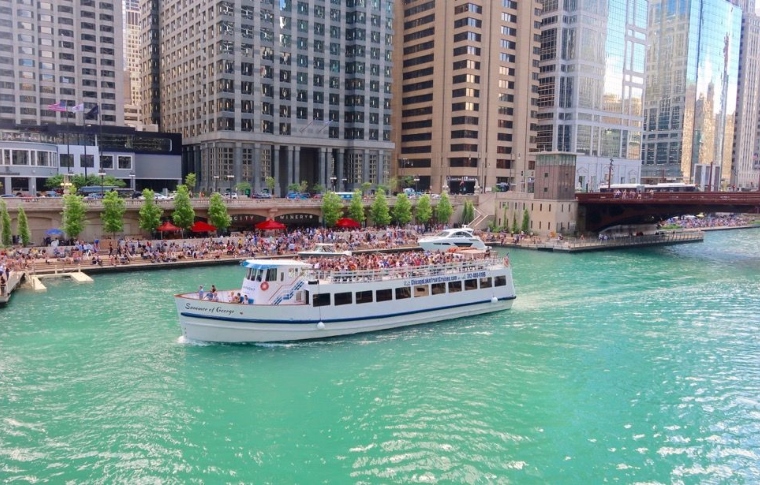
Step onto a boat at the Riverwalk on a clear afternoon and you feel it at once. The city narrows, water replaces asphalt, and the skyline stops being a faraway silhouette. It becomes a sequence you can read, one bend at a time. Guides point their microphones toward corn cob cylinders, black steel exoskeletons, rippling balconies that catch the light like a lake surface. Chicago’s river tours succeed because they treat skyscrapers not as scenery but as the main text. The water is the margin where the annotations come to life.
This is not a happy accident. Chicago’s high-rises grew up with the river and around it, and the city’s signature towers have always mirrored the needs of commerce moving through this waterway. You can take a walking tour along Michigan Avenue and admire facades, and you should, but the river is where the whole argument of the skyline resolves. From the boat, buildings line up in time order, in engineering order, and sometimes in stubborn contradiction.
Why the river turns towers into a living syllabus
Several forces converge to make skyscrapers central on the water. Geography is the plainest one. The Chicago River splits downtown into coherent corridors of architecture. The Main Stem between Lake Michigan and Wolf Point runs east to west, then the North and South Branches peel away. This geometry sets up framed views that explain history without much narration. East to west, you watch architecture advance from revivalist masonry through structural expressionism, then on to postmodern play and contemporary glass. North and south, you see the river’s industrial past morph into residential and mixed-use fronts.
The river also dictates sightlines. Street-level tours force you to tilt back, which flattens towers into abstractions. On a boat, you sit at mid-level. You can watch how a structure meets the ground and how the facade changes as it climbs. You can see setbacks and transitions meant for air and light, not just for code. This perspective lets you measure intent. It is obvious from the water that Jeanne Gang’s Aqua does not ripple for decoration alone. The projecting balconies vary to break up wind vortices that would otherwise make the building hum. On land, that logic hides in your own craned neck.
Finally, the river puts engineering into context. The city’s moveable bridges, its river reversal at the turn of the twentieth century, and the caissons sunk to dolomitic limestone beneath many towers show that skyscrapers here are not trophies, they are solutions. A guide can gesture to a bridge counterweight and pivot to explain the tuned mass of a supertall. The analogy makes sense because both are precise answers to gravity, wind, and flow.
A short history that lands better from a deck chair
Chicago did not invent the elevator, but it combined the elevator with fireproof steel-frame construction at the right time. After the Great Fire of 1871, the city rebuilt fast with stricter codes and an appetite for efficiency. The ten-story Home Insurance Building, completed in 1885 by William Le Baron Jenney, used a steel skeleton that allowed large windows and reduced weight. It stood a few blocks south of the river and was demolished in 1931, but the idea spread. Steel frames meant height without thick bearing walls. The city’s narrow blocks, speculators’ needs, and a rail and water freight nexus all pushed building upward.
Early office buildings of the so-called Chicago School, like the Rookery and the Monadnock, do not face the river, yet their willingness to express structure in their facades set a tone. By the 1920s, when Chicago’s downtown had grown denser and more image conscious, riverfront sites became prime stages for corporate identity. The Wrigley Building, bright with terracotta, rose on the north bank in 1924 as a sort of lighthouse for Michigan Avenue. Across the street, the Tribune Tower turned neo-Gothic silhouettes into brand-building. Both structures make more visual sense from a boat, where you can see how they bracket the river mouth like ceremonial gates.
Art Deco took to the water as well. The Civic Opera House and the Merchandise Mart carry themselves like ships, long and horizontal, with vertical punctuation at corners and entrances. The Mart, with more than 4 million square feet, once had its own zip code. Guides like to call it a building that could host a small city. From a pier, you see not only size but program. Those long ribbon windows served wholesale markets, not executives. That purpose reads clearly from the river, more than it ever will from a sidewalk crossing.
Then came the mid-century turn toward steel and glass, which Chicago adopted with enthusiasm and a certain local rigor. Skidmore, Owings & Merrill and others pushed clarity of structure. The elegant curve of 333 Wacker Drive, completed in 1983, embraces the river bend not as a flourish, but to move more rentable daylight to more desks. That curve catches sunsets in late summer, a reward you do not get on LaSalle Street. When the boat idles there, the building becomes a polished green mirror that folds the river into the skyline.
The river as gallery: reading specific towers as you pass
If you ride a typical tour, you will likely start near the Michigan Avenue Bridge and glide west. The river immediately forces a choice about how to see height. The Wrigley and Tribune are not the tallest by far. They still act as anchors because they command the river mouth. Their massing and ornament create legibility at boat speed, and they tell you that a building can earn a place in the city’s memory without an altitude record.
Keep going and you will spot Marina City, two round towers by Bertrand Goldberg completed in the 1960s, each about 587 feet tall. They look playful, and guides sometimes relish the parking garage stories, but the truth is more pointed. Goldberg hated cookie-cutter plans. The pie-wedge apartments carve out shared views and balance privacy with outward living. Seen from the water, those scalloped balconies show human scale in a city that can forget it. The towers lift people above a river that used to stink of industry. They were aspirational when they opened, and they still look optimistic from a boat in evening light.
Trump International Hotel and Tower rises nearby at 1,389 feet including its spire. Its setbacks line up with the cornice heights of the Wrigley Building and the IBM Building, a polite gesture to the older skyline. The gesture is easy to miss from the street. From the river it reads like a triple handshake. You can decide whether you think this is sensitive urbanism or a branding exercise. The point is that the river gives you the evidence.
On the North Branch, Aqua catches you off guard. At 82 stories and about 859 feet, it feels taller because of the shifting concrete balconies that turn wind into a textured facade. The St. Regis Chicago, earlier known as the Vista Tower, brings another entry for the city’s height ledger at 1,191 feet. Its stepped, three-tower profile breaks down mass on a site where solid meets liquid, high-rises meet parkland, and the river meets lake breezes. From the water you can watch the glass shift tone as clouds move. That visual dynamism might feel like ornament from a photo. In person it plays like an honest response to changing light.
Swing back toward the South Branch and you step into a different narrative, one with more freight in its memory. The South Branch carried stockyards and industry, and you still pass rail bridges and the bascule spans that open in spring and fall for sailboat migrations. Discount these at your peril. The portable ironwork teaches you to respect forces. The same wind that requires a truss in the John Hancock Center, now 875 North Michigan Avenue, also demands siding details on a low bridge. Hancock’s cross bracing, visible on its facade, shortens unbraced lengths and lets it stand at 1,128 feet to the roof without the flab of excessive interior columns. The structure is not an afterthought. It is the expression.
Bertrand Goldberg reappears on the South Branch at River City, a serpentine residential complex from the mid-1980s. Its curve tries to hug a river that often wanted to be forgotten. You might not love its rough concrete, but from a boat it shows the pendulum swing from corporate riverfront to domestic riverfront. A skyline is not only about office trophies. It is also about where people sleep, shop, and walk strollers at 8 a.m. On a Tuesday.
Engineering beneath the postcard
No tour script can cover foundations in depth, yet the river is where those topics find their best footing. Chicago soil is soft near the surface, so major towers often sit on caissons or piles that drill down to bedrock, sometimes more than 100 feet below grade. The 110-story Willis Tower, completed in 1973, rests on a forest of such supports. Its bundle tube structure reduces wind sway by grouping nine square tubes of different heights. That logic becomes most legible from the river, where you can count the step-backs and see how height is composed, not simply reached.
Wind drives everything here. Lake-driven gusts funnel along the river and around corners. Architects tune facade elements, shapes, and even the distance between towers to avoid vortex shedding that can make a building vibrate at uncomfortable frequencies. When a guide points to a notched corner or a perforated screen near the top of a residential tower, they are not just collecting trivia. They are dropping clues about wind tests in boundary-layer wind tunnels, models that might have seen hundreds of hours of simulated storms.
Water itself has been an engineering subject since the city reversed the river’s flow in the early 1900s to protect the drinking supply. That reversal lowered pollution levels and made the downtown stretches livable again. Modern tours glide past riverbank plantings, kayak launches, and cafes that would have been hard to imagine when coal barges crowned the current. You can call that urban design. It is also a long arc of public health policy made visible in the reflection of glass towers.
The cultural stakes behind the height race
People often board chicago architecture chicago river boat ride boat tours as a sightseeing treat, but they end up learning a civic language. Height has been competitive here. New York and Chicago traded superlatives across the twentieth century, and for a while it mattered to have the tallest building. That race still flickers, but what the river teaches is something subtler. A city’s ambition lives not only in total feet above grade, but in how its towers land, share light, make wind tolerable, and speak to each other across water.

Take the way 333 Wacker curves to catch daylight and reflect river traffic. It acts less like a brute box and more like a participant. Or look at how the St. Regis staggers its heights to protect views for existing neighbors. You might read these as political compromises. You could also read them as the civic version of manners. Either way, their effect is clearest from the river where you can line up the old sightlines and see what has been preserved or blocked.
Chicago’s habit of renovation matters too. The London Guarantee Building became LondonHouse, a hotel with a rooftop cupola bar that gives you the mirror image of your boat ride, and the Merchandise Mart has rebranded as a tech and design hub. Adaptive reuse prevents the skyline from becoming a museum. It makes the river feel like a living edge where each generation sets a few stones of its own.
Why guides foreground skyscrapers and not the riverbank landscaping
Good tour guides could talk about plant species along the Riverwalk or the exact alloy of a bridge trunnion, but they give pride of place to the towers for several reasons.
First, skyscrapers compress a century and a half of innovation into visible layers. You can point to a terracotta spandrel, a steel truss, a glass curtain wall, and a tuned damper and cover economics, materials science, and aesthetics in one sweep. A riverbank railing cannot carry that much meaning per foot.
Second, buildings anchor memory. Visitors remember riverboat tour chicago their seatmates craning toward Marina City or gasping as the boat turns under the brown steel of a raised bridge. They retell those stories later. Guides know that those retellings keep the river culture alive, which matters when budgets for maintenance or preservation come up for vote.
Third, the towers earn their centrality. They were expensive, they were risky when they were built, and they solved problems that seemed impossible at the time. That kind of effort deserves a close reading, and the boat is the best place to do it.
How to read a tower from the water without a script
You can enjoy the ride, take your photos, and let a guide do the talking. If you want to sharpen your eye, a few habits help.
- Start at the base. Look for how the building meets the sidewalk, the riverwall, and any public space. A generous lobby set back or a colonnade often signals a building that expects foot traffic and intends to share a bit of its ground plane.
- Track the structure. If you can see braces, columns, or truss work on the facade, ask yourself what loads they are managing. Diagonal braces usually hint at wind strategies. Setbacks can indicate changes in column spacing.
- Watch the cladding change with light. Some glass shifts tone across the day, which can tell you about coatings and energy strategies. A static facade under changing light may look crisp in sun but flat in overcast. That choice says something about priorities.
- Note the neighbors. Does the tower align with cornices next door, step back to preserve a view, or ignore the context? Harmony and defiance are both stories worth hearing.
- Glance at the roof. A pure box that ends without mechanical clutter is rare. Penthouse forms, screened equipment, or even a spire reveal function and brand intent.
A river’s eye on trade-offs and the limits of glass
Not every decision reads as heroism. Glassy residential towers bring life to the river but can increase bird strikes during migration seasons if not designed with patterned or treated glass. Chicago has pushed for bird-friendly guidelines and more recent projects often use glass with subtle markings. From a boat, look for fritted bands or patterned panes near treelines. The fact that you can see those patterns means the building is doing its job where it counts.
Sustainability metrics are another topic that benefits from the water view. A river breeze cools the edge of the city and can tempt designers to rely on operable windows. That sounds ideal until you live 60 floors up where wind speeds differ, and noise travels from bridges and boats. Mechanical systems still carry most of the load in supertalls. You can respect a green roof or a high-performance curtain wall while also acknowledging that height has energy penalties. The river’s constant motion keeps the conversation honest. You cannot pretend a tower floats off the grid when your boat engine hums.
The timing and tempo of a good tour
Light makes or breaks a river tour as much as weather. Morning rides wash the east-west Main Stem with even light. Late afternoon and early evening put the fire in 333 Wacker’s curve and turn terracotta warm. Night tours swap detail for drama, especially when the city runs light shows on the Merchandise Mart’s facade. You lose some texture but gain theater. If you care about reading structure, daytime is better. If you like a skyline that sparkles, go after dusk.
Most tours run 75 to 90 minutes, which is long enough to cover the Main Stem and dips into at least one branch. The official architecture river cruise, offered by the Chicago Architecture Center in partnership with Chicago’s First Lady, has trained docents who can field detailed questions and cite dates without mangling them. Other operators on chicago architecture boat tours lean more on entertainment. There is room for both styles, but if you want to come away with working knowledge, the docent model has an edge.
Seating matters more than people admit. Sit low and outside if you can. You will trade a bit of glare for sightlines that let you stitch ground to sky. Upper decks offer big views, but they can flatten proportions and turn a 500-foot building into a postcard. On colder days, indoor cabins save fingers, but they also tint your world a slightly greener or bluer shade through the windows. If you plan to photograph, clean glass and an end seat solve half your problems.
Choosing the right experience for your appetite
A few practical pointers help match a tour to your curiosity.
- Check the route map. Some trips skip the South Branch, which holds a lot of industrial history and engineering detail. If that story interests you, pick an operator who goes there.
- Ask about narration style. Docent-led tours reward note takers. Lighter narration fits family groups who want more skyline and less syllabus.
- Consider the season. Late spring through early fall offers open bridges for sailboats on certain weekends. You may pause more, but the moving mechanics are a bonus.
- Mind the wind. Even in August, the river can read ten degrees cooler than inland streets. Layers keep you focused on architecture instead of your goosebumps.
- Look for small touches. Boats with open bows or unobstructed rails make it easier to read the bases of buildings as you pass.
Bridging the river and the street after you dock
A river tour chicago river boat cruise is a beginning, not an end. If a building caught your attention, go see it up close. The Rookery’s light court shows off structural clarity that colored modernism for decades, and it is a short walk from the river. The lobby of 875 North Michigan Avenue explains its X-braced facade from the inside, a lesson in how diagonals open up rentable space. Tribune Tower’s stones from world monuments embedded in its base work as a tactile history book. These follow-ups make the architecture you saw from the water stick. They also restore the sense that a skyline is a collection of places, not just elevations.
Keep your eye out for the everyday fabric too. Modest riverfront infill projects, sometimes only a few stories, try to connect the Riverwalk’s segments and link the water to inland blocks. They do not star in tour scripts, but they frame the famous neighbors and add to the life at the edge. That edge condition is where a city negotiates between public and private, between free views and leased views, and between spectacle and everyday use. The more you notice those negotiations, the more the skyscrapers gain depth.
What the water teaches about Chicago’s temperament
You could argue that any city with tall buildings would show well from a boat. Chicago adds a temperament that favors clarity, visible structure, and an unembarrassed embrace of engineering. The river makes that temperament legible. It places the towers in a corridor of movement and commerce that built them, and it lets you measure how each new building earns its place in a lineage that started with a steel frame and a practical need to fit more business near the tracks and docks.
That practicality has not killed poetry. On a calm evening, the river carries painterly reflections that stitch a century of styles into one wavering band of color. A hawk might ride a thermal between Aqua and the St. Regis. A bridge lifts like a stage set, and a rower pulls under an arch as a train crosses. A guide names square footage and completion dates, but what you remember is the way the glass caught the sky and the way an old limestone pier felt solid after so much churn.
Skyscrapers are central to Chicago’s architecture river tours because they hold the city’s biography in their frames. The river gives you the distance to listen. You are not forced to love every tower. Your job, as the boat rounds another bend, is to look closely and decide what kind of city these buildings make together. The water keeps score with you, calm on the surface, full of current underneath.
Tours & Boats Architecture Tours 900 S Wells St Chicago, IL 60607 ph: (312) 858-6955 https://toursandboats.com