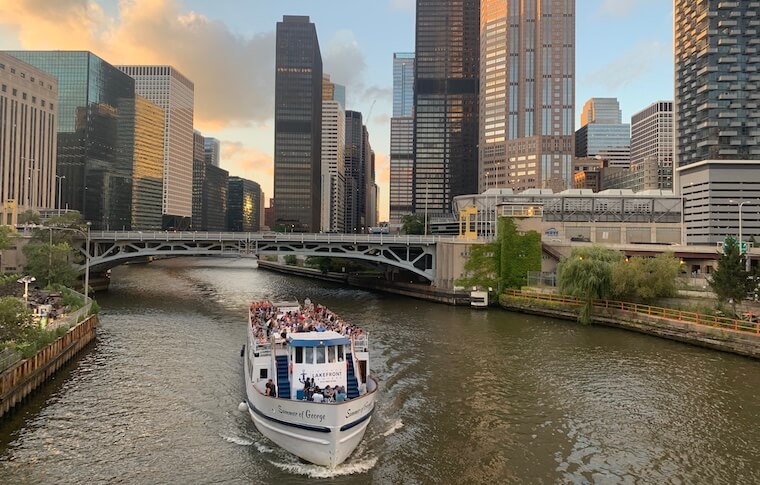
Why Sunset River Cruises in Chicago Are Popular for Photos
Stand on the open deck of a river boat as the sun slides toward the skyline and you quickly understand why cameras come out. The light softens, the glass begins to glow, and the water turns from pewter to a sheet of copper. Chicago’s river at sunset offers a combination of angles, reflections, and architectural variety that is hard to duplicate from the shoreline. After years of shooting around the city, I have learned that the river at the end of the day compresses many of Chicago’s strongest visual qualities into a 90 minute loop. No surprise that sunset river cruises sell out early and fill social feeds the same night.
What the light does between the buildings
Even people who never use the phrase golden hour can see the difference. Late-day light in Chicago is directional but forgiving. It grazes facades instead of blasting them, which reveals depth rather than washing it out. The older limestone and terra-cotta buildings near the main branch show texture at this time. You can trace ornament on the Wrigley Building with a 50 mm lens and it looks three dimensional. Meanwhile, newer towers like 333 Wacker, with its curved green glass, catch horizontal bands of sky color. The curve throws back a painterly reflection of the river and the opposite bank.
Sunset also reduces contrast. At noon, the gap between bright sky and deep shadow is often too wide to hold in a single exposure, even with careful metering. When the sun drops, those extremes move closer together. Shadows fill in. Windows stop blowing out. A basic smartphone can cope without turning everything into mush. For photographers who shoot RAW, it means a cleaner starting point with less need to rescue highlights or lift noisy shadows later.
The second half of golden hour often produces backlight along the east-west stretch of the main branch. That means rim-lit silhouettes of bridges and people on the riverwalk, and it means flare if you point a lens straight into the sun. Some shooters lean into it. Starbursts from narrow apertures can work as a style choice if you are deliberate and steady. Others swing 15 degrees off the sun line to keep color and edge contrast, using the flare only as a soft glow around the frame. Either way, there is a zone of minutes where every turn of the river gives you a new geometry of light and shade.
Why the river is the right distance from everything
Many cities have stunning skylines that you can only appreciate from a mile away. Chicago’s river narrows that gap. From a boat you sit within a canyon that still allows wide views. The set‑back rules that shaped downtown produced tiered buildings right along the water, not blank walls. That creates layering. You can put a bridge girder in the foreground, an early 20th century tower in the midground, and a glass needle beyond, all without a long lens.
The distance also keeps verticals looking vertical. From the sidewalk, you spend half your time tilting up and straightening perspective in post. On the river, you can shoot level more often. The camera sees less distortion, which makes it easier to present a truthful sense of scale. The Merchandise Mart reads as a broad block rather than a receding wedge. St. Regis Chicago, with its stacked, shifting volumes, retains the step effect instead of collapsing into a single face. You are not trapped below the cornice line, and you are not so far away that detail is lost.
There is also motion. That might sound like a drawback, and sometimes it is, but motion makes good frames if you plan for it. A slow drift under the DuSable Bridge puts the bridgehouse sculptures into view, then the span, then the people leaning on the railing as the last light hits their hair. You cannot stage that from a tripod. The boat gives you living elements. A kayak bobs past. A water taxi creates a wake. Each passes through reflections that shift by the second. If you shoot a series, you get twenty noticeably different images in as many seconds without moving your feet.
Architectural range in one loop
The density of styles along the river is part of the city’s identity and the reason chicago architecture boat tours are a staple for visitors and locals. For photographs, that variety is a gift. It gives you contrast in material, height, and ornament within short sightlines.
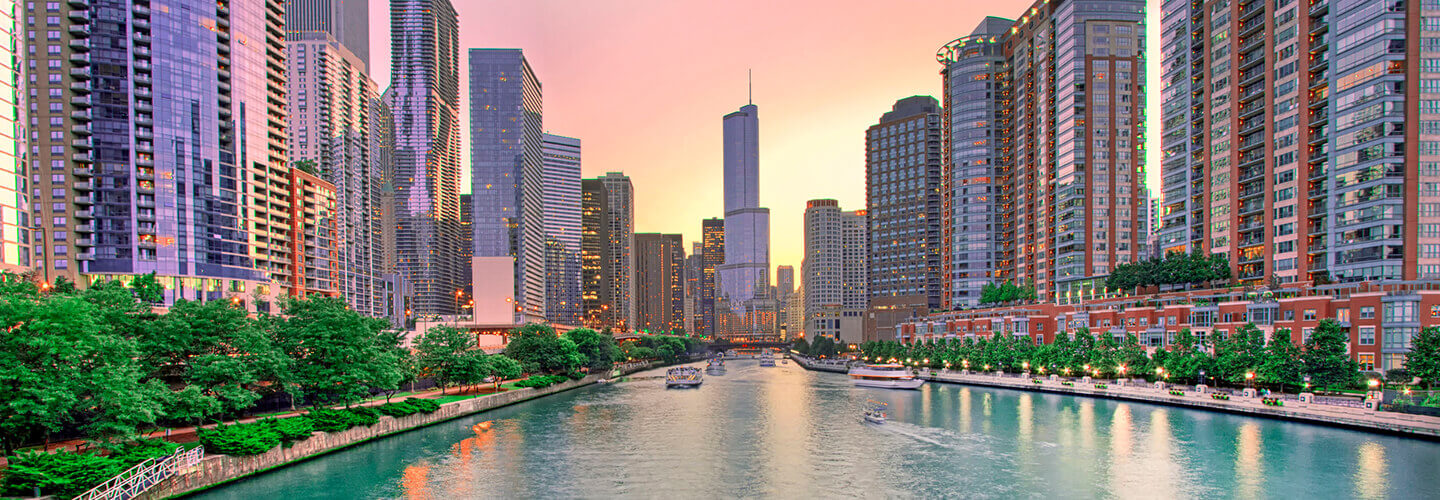
Consider a stretch from the Michigan Avenue Bridge to Wolf Point. You can frame the Wrigley Building’s white gleam beside the Gothic verticals of Tribune Tower, then pivot your hips and catch the cool green curtain of 333 Wacker. Chicago’s modern layer rises farther south and west, where the river forks. You might catch the sun striking the angled planes of 150 North Riverside, which often looks like it is balanced on a keel at the river’s edge. If clouds cooperate, the mirrored base pulls the sky into the water. On certain dates, the setting sun lines up with the South Branch and paints the corridor a deeper amber than usual.
The mix gets even more interesting when you round a bend. Curves, setbacks, architecture tour and small plazas interrupt the otherwise rigid grid. The Apple store’s low roof near Michigan Avenue opens up a slice of sky that helps separate Tribune’s silhouette. A few minutes later, Marina City’s twin corncobs puncture the frame. Their scalloped balconies give you an instant pattern that reads in wide shots and in tight crops. By the time you pass the old Post Office and swing into the South Branch, you get long looks at tracks, bridges, and machinery that put steel and rivets beside glass towers. It is context, not clutter.
If your timing and season line up, Art on theMART begins about half an hour after sunset, projecting digital art across 2.5 acres of the building’s river-facing facade. In early summer it may start too late for most tours, but in September and October, an evening cruise can overlap with the show. Long exposures on a stable deck pick up enough of the motion to feel alive without smearing into haze.
Reflections that only appear from the waterline
Photographers talk about color temperature like it is a mood knob. At sunset, the sky is both warm near the horizon and cooler above, which means reflective surfaces pull different tones depending on angle. The river acts as a massive moving mirror. From a lower deck, you often see a checkerboard of hues that a high riverwalk vantage misses. That is why two people can shoot the same building ten minutes apart and end up with very different palettes.
The most dramatic reflections show up along convex facades and on the surface itself. 333 Wacker is the obvious example. From the boat, you can place the curve to capture the orange of the sky on the left, a slate blue on the right, and a green band from the river near the base. With a polarizer, you control how much glare you keep. Full polarization strips down reflections, which is sometimes wrong here. Dial it back a quarter turn to hold the sheen and avoid a plastic look.
On breezy evenings, small ripples paint the water with vertical brushstrokes. Bridges and pilings break the pattern into compartments. That lends itself to slower shutter speeds if you want to turn confusion into something soft and readable. At 1/5 to 1/2 second, a handrail becomes a silver line and the ripples merge into silk. You can rest against the rail and brace your elbows to make it work, but a compact clamp or mini support against a seatback steadies things more reliably.
The human scale that fills a frame
Architecture is the draw, yet many of the most shared images include people. The boat gives you candid moments that look composed because the city arranges the backdrop for you. A couple leans on the bow, backlit by the Tribune Tower spire. A child points at a passing bridge as the last sunbeam catches a cloud. Street-level shots can do this too, but the river cuts down distracting background clutter. You get concrete, water, and clean sky behind your subject instead of parked cars and bus shelters.
Bridges are stages. As you approach them, the silhouettes of commuters and photographers create friezes in a single plane. It is easy to wait for a passerby to enter the midpoint and press the shutter when their head clears a girder. If you like graphic compositions, use the truss pattern to lead lines toward your subject and let the building mass carry the rest of the frame.
Tour boats also provide a self-contained story. Photographers shoot fellow passengers for scale and mood. Faces read well in the slant light of sunset. Everyone looks better in that hour, and because many riders are already taking pictures, cameras in the scene feel natural rather than intrusive. If you are mindful about consent and comfortable range, a 70 to 135 mm field of view from a respectful distance avoids awkwardness.
Weather and season: friends, not enemies
The notion that sunsets require a clear sky sells a lot of postcards and misses a lot of pictures. The best evenings often have broken clouds that catch color after the sun drops. Chicago’s weather serves these moments often enough to matter. A bank of mid-level clouds that looks like a spoiler at 5 pm can go cotton candy at 8:20 pm in June. In shoulder seasons, lower sun angles and cooler air can produce sharper edges to light shafts between buildings, which helps if you like distinct shadows.
Angles and timing shift with the calendar. In late December, sunset can arrive around 4:20 pm. In late June and early July, the sun can linger past 8:30 pm. That changes the route’s light hits. Early in the year, north-facing facades pick up more reflected light from the opposite bank. In high summer, direct light tapestries the west end of the main branch. If you are hoping to pair a river cruise with fireworks at Navy Pier on a Wednesday or Saturday in summer, consider where the boat will be at blue hour. Some operators time their lake exits to catch both the river at sunset and the show after dark on the open water.
Wind and temperature are not trivial. Spring wind funnels along the river and can sting. A light jacket is not a fashion note, it is the difference between relaxed hands and clenched fingers that fight the shutter. Humidity will fog lenses when you step from an air-conditioned cabin into warm evening air. Keep a microfiber cloth and give the glass a minute to acclimate. If your camera allows, set a custom white balance or at least shoot RAW to avoid wrestling with mixed temperatures from sky, water, and sodium bridge lights later.
Timing that suits the route
Captains and docents know their curves. On chicago architecture boat tours, the narration and pacing match what is visible at each bend. At sunset, that planning pays off two ways. First, bridges and facades that look flat at midday become layered, and the tour points you toward those stacks right as they pop. Second, if you miss a shot from the port side, the boat often returns along a slightly different line with reverse light. You get a second chance without sprinting across town.
If you want to maximize keepers, match your boarding time to the pace of golden hour. A 90 minute cruise that starts 30 to 45 minutes before sunset puts you along the South Branch during peak warmth, then returns through the main channel as the city slips into blue hour. A 60 minute trip may give you a stronger single sequence if the light lines up, but you will have fewer passes to correct for mistakes. Families and groups often prefer the shorter run. Solo shooters who want more swing at the pitch tend to choose longer.
A simple timeline that works well for most months:
- Arrive 45 to 60 minutes early to scout the boarding location and sky, then choose where you want to start on the deck.
- First 15 minutes on board, grab establishing frames with higher shutter speeds while you settle into the boat’s motion.
- Approaching sunset, slow down. Work side profiles of buildings and reflections as the light compresses.
- Post-sunset to blue hour, stabilize and shoot wider scenes that include early lights and the glow in the sky.
Practical camera choices on a moving platform
You do not need a trunk full of glass. A two-lens approach covers nearly everything, and many nights your phone will do 80 percent of the work if you know its limits. The challenge is less about reach and more about stability and dynamic range.
A compact pre-boarding checklist:
- A midrange zoom or 35 to 50 mm prime for most frames, plus a wider option if you love tall close-ups.
- A small cloth and a spare battery, since sunset into evening drains power faster with live view and stabilization.
- A variable ND or polarizer, but only if you know how to adjust quickly without losing light.
- A way to brace the camera, from a wrist strap you can tension against the rail to a tiny clamp or bean bag.
On the boat, shutter speed is the gatekeeper. At 1/125 second and faster, most people can keep a wide to normal lens sharp as the boat glides. For slower, more atmospheric shots that emphasize reflections, bracket around 1/10 to 1/2 second and accept you will lose a few to motion. Use burst mode to improve odds. Image stabilization helps, but technique matters more. Plant your feet, lean your hip or shoulder against a fixed surface, exhale when you press, and time exposures for calmer stretches between wake hits.
Metering can drift as you swing from sky to shaded walls. For consistency, use exposure compensation rather than full manual unless you are deeply comfortable working dials under pressure. Start at minus one third to minus two thirds to protect highlights when you include bright sky. If you are focusing on people against darker water, add a touch back to avoid muddy skin tones. Autofocus usually has plenty of contrast at this hour. Single point AF on high-contrast edges, like bridge rivets or window mullions, helps avoid hunting.
If you are shooting on a phone, lock exposure and focus when the frame looks right, then recompose. Phones tend to bump exposure up when they see darker river water, which can blow out the sky. Many newer phones offer a RAW option in their pro or advanced modes. If the trip matters to you, toggle it on for flexibility in post.
Working the deck like a location scout
Where you stand on a deck shapes 70 percent of your results. The bow gives you clean, forward-facing compositions and first look at upcoming scenes. The stern gives you separation from other passengers and long receding lines of bridges. Upper decks get you above the rail for shots that clear heads, but wind is stronger, and camera shake increases in gusts. Lower decks put reflections in play and reduce sway, though your angles through railings narrow.
If you board early enough, pick a home base but plan to shift a few times. A short walk from port to starboard can turn one workable frame into three strong ones. When the tour guide calls out a building, listen for where the boat will pivot to give the full view. Many captains swing slightly as they pass a landmark so both sides get a look. That arc is your cue to move or to hold, depending on where you want the sun relative to your subject.
Respect other riders. No one enjoys a photographer who blocks sightlines for ten minutes. Work low when you have to step in front of someone. Offer a quick photo for the couple you edged past. The goodwill pays off when you need to slip back into a spot for a particular shot later.
Crowds, lines, and how to avoid both
Sunset attracts everyone. On peak weekends in June through early September, lines form 30 to 45 minutes ahead of departure. Chicagoans, visitors from the suburbs, tourists who picked the time slot last minute, and groups celebrating birthdays or work events all end up in the same queue. If you prefer quieter decks and more room to work, weekdays are better, especially Tuesday and Wednesday. The light does not care what day it is.
Shoulder seasons reward patience. Late April and early May can be blustery, but the city has a fresh, clear look after winter. The river runs a cleaner green and the air has less haze. After Labor Day, the crowds thin and sunsets tend to turn more dramatic as the angle of the sun shifts and evenings cool. You can sometimes book a sunset slot on the same day in late September, which is almost impossible in July.
The role of narration and why it matters for images
Some photographers dismiss narration as background noise. That is a mistake on chicago architecture boat tours. Good docents know the right beats. They point out where to look before a moment materializes. If a reflection you cannot see yet is about to sing on the right, they will say so. They best chicago tours and the captain adjust speed for bridges and wake, which stabilizes the platform. I have taken the same route on a no‑narration boat and on a proper architecture tour. The latter made better pictures not because the buildings changed, but because the pacing matched the light and angles.
Stories also give you captions later. Knowing that a particular spire belongs to a 1920s Gothic revival tower or that a new facade uses a specific type of fritted glass sharpens how you share the image. The difference between pretty and purposeful can be a sentence.
Trade‑offs and mistakes I still make
Motion blur is the obvious trap. The less obvious one is the lure of the sky at the expense of the water. New photographers point up and forget the foreground, then wonder why their images feel generic. The river is not just context. It is a colored plane that ties frames together and grounds the skyscrapers. Include a strip of water even in tight shots of facades. That line carries color and light through the image.
Over‑polarizing is another. Twist a polarizer too far and you strip the sparkle that makes the scene feel wet and alive. I prefer to use it lightly, just enough to cut the harshest glare, then stop. If you see uneven dark patches in the sky, especially with a wide lens, back off. Polarization changes across the frame when the angle to the sun varies, which it often does near sunset on a river flanked by tall buildings.
Finally, watch your edges. Bridges, mast lights, and flagpoles creep into corners as the boat turns. A clean frame pays off more than a slightly better moment with a stray half‑pole in the top right. Leave a little room to crop. Modern sensors have pixels to spare, and even phones these days handle a modest crop well if the exposure is solid.
Safety, etiquette, and small comforts
Boats are stable, but decks get slick. Evenings can bring dew. Grippy soles beat leather dress shoes if you plan to move around. Keep straps on wrists or across shoulders. One lurch, and that dream lens becomes a story you do not want to tell. Tripods are rarely welcomed on crowded decks, and they are a hazard when people need to pass. A compact alternative, like a small clamp or a strap braced against the rail, does the job without creating a tripping point.
Be considerate with flash. Direct bursts at sunset flatten the scene and annoy everyone within 20 feet. If you must use supplemental light for a portrait, feather it and keep power low, but save it for private charters where you will not blind strangers.
Food and drink matter more than they should. Eat before you board or pack a small snack. Blood sugar crashes make clumsy photographers. Hydrate, but pick containers with lids. Open cups and river boats do not mix.
Why these photos travel well online and in print
Sunset river images hit a broad audience because they combine recognizable architectural boat tours chicago landmarks with rich atmospherics. You can post a silhouette of Marina City with warm clouds behind it and half your followers will know the place instantly. The rest will feel the pull of color and shape even if they have never set foot in Chicago. The river adds motion and reflection that helps phones and monitors show depth without fancy editing. Printed large, the same qualities hold. Soft light hides noise and smooths gradients, which makes big prints look clean.
Editors like these frames for another reason. They show a city at human scale even while celebrating height. A modest figure leaning on a deck rail, a bridge grid cutting diagonals through the frame, a facade catching the day’s last light, all in one place. It is a shorthand for the idea of urban life that is both specific and flexible. You can run a photo from a late July evening beside a story about an autumn event, and it fits.
An evening on the water, told in small decisions
Ask a dozen photographers why they book sunset river cruises and you will hear the same ingredients said in different ways. Good light, varied architecture, river reflections, easy access, and a route that keeps giving you new angles at human scale. The truth is that the combination rewards attention. You do not need perfect weather or pro gear. You need to arrive a touch early, choose a spot, notice how the light shifts, and keep your edges clean. The city does the rest.
On a recent August night, I watched a family tuck into a corner of the bow as we passed beneath the Franklin Street Bridge. The father had a small mirrorless camera. The mother used her phone. Their daughter, maybe eight, leaned over the rail as 150 North Riverside lit up behind her. The sun had dropped, blue hour starting to wrap the towers. He shot wide, then stepped back and turned vertical. She waited for the building lights to warm and took a single frame. I happened to see it later when she shared it online. The girl’s fingers trailed above the water, hair catching the last soft glow, the tower a luminous stack beyond. Pretty picture, yes. But more than that, it felt like a true piece of the city, made possible by timing, light, and a river that puts everything at the right distance. That is the draw. That is why sunset river cruises in Chicago fill with people who show up for a tour and leave with photographs they will keep.
Tours & Boats Architecture Tours 900 S Wells St Chicago, IL 60607 ph: (312) 858-6955 https://toursandboats.com