Why the Chicago Architecture Boat Tour Is a Must-Do City Activity
Walk any block in the Loop and you will feel the city press in around you, all steel, limestone, and glass. Step onto a boat on the Chicago River and the skyline unspools at a human pace. The water lays out the city’s story in sequence, from stout riverfront warehouses to swaggering modernist towers to post-recession supertalls with shimmering crowns. If you only have time for one deep look at Chicago, do it from the river. The guides will tell you names and dates. The city will tell you what it felt like to keep reinventing itself.
I have taken this tour in rain that spit sideways, in July heat, in October light that made the Wrigley Building glow. Every time, the view changes, and the narration fills in new layers. You do not need to love cornices or curtain walls to enjoy it. You just need to appreciate how a city learns from its mistakes and keeps building.
What makes a river tour different from walking the Loop
Plenty of cities sell skyline cruises. Chicago’s version has teeth because the river runs through the densest architectural laboratory in the country. After the 1871 fire, this was a blank canvas. Over the next 150 years, architects tried and tested nearly every major American style within a few square miles. The river gives you the throughline.
From the water, relationships between buildings make sense. How Marina City’s scalloped towers sit like sentinels at the bend, how the glass of 300 North LaSalle reflects the sharp edges of the Reid Murdoch Building across from it, how the stepped setbacks of Art Deco give way to the structural clarity of Mies van der Rohe. A street-level tour can point to a facade. A boat lets you see a block breathe.
The river also puts you at eye level with the engineering that made this city possible. Bascule bridges with counterweights the size of buses lift in spring for sailboat migration. River locks calm the chop where fresh water gives way to the lake. On a good tour, a docent will explain why the river famously runs in reverse, a public-health moonshot completed in 1900 that kept sewage out of the drinking supply and launched a century of civil engineering projects downstream.
A route that reads like a syllabus
Most chicago architecture boat tours follow a similar loop. You board on the main branch, near Michigan Avenue or Wabash. The boat steers west, then splits time between the North Branch, usually up past Wolf Point and toward Goose Island, and the South Branch, down toward the old riverfront rail yards and the edges of Chinatown. Operators adjust for river traffic and water levels, but a typical trip runs 75 to 90 minutes.
Along the main branch, you start with the 1920s on parade. The Wrigley Building gleams white with terra cotta and Spanish Renaissance touches. Across the way, the Tribune Tower wears its Gothic crown, studded with stones taken from landmarks around the world, a time capsule set in concrete. The London Guarantee Building completes the trio at the Michigan Avenue bridge, its Beaux Arts curves looking east to where the river meets the lake.
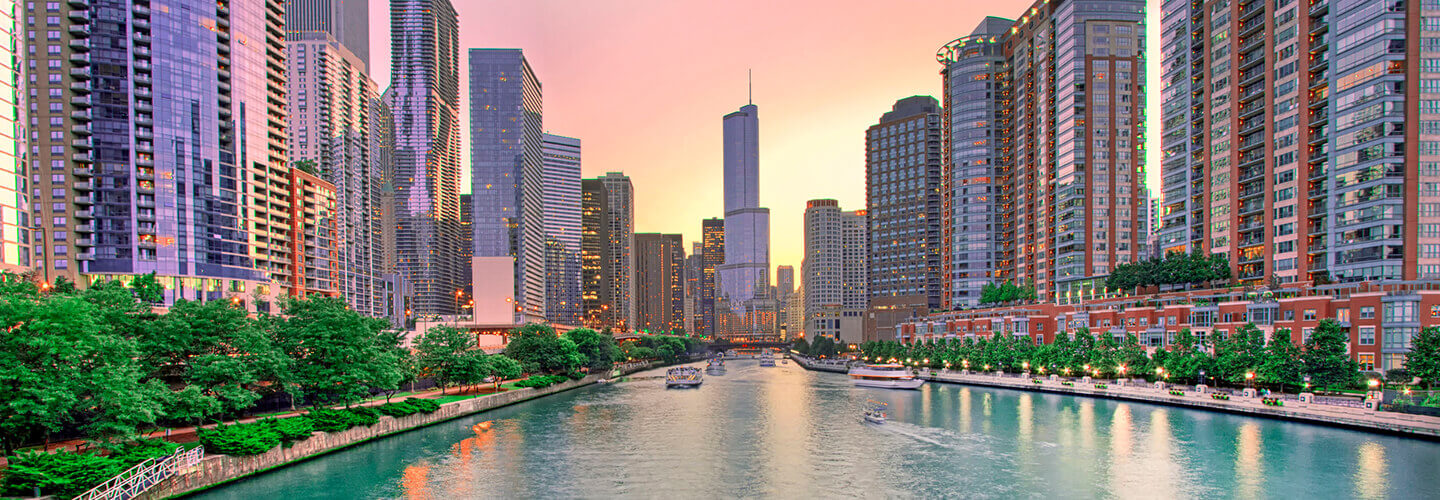
Move west and the mood shifts. Mies’s IBM Building, now AMA Plaza, sets a crisp grid a little off the water, all business and proportion. Marina City pops into view next, Bertrand Goldberg’s corn cobs, arguably the city’s most photographed apartments, parking spiraled in the open like a sculpture. You pass River City on the South Branch later on, another Goldberg experiment, this one like a concrete river snake with porthole windows.
On the North Branch, Wolf Point pulls together three glassy towers from the last decade set on a site that once swarmed with timber and canal boats. The guides will point to 150 North Riverside, a balancing act that flares out like a heel on stilts because a commuter rail corridor pins it tight to the riverbank. That one is a crowd pleaser. People lean forward to see how a building that wide can stand on a base that narrow. It does, thanks to tuned mass dampers and a steel-and-concrete core rooted deep below grade.
Head south and you look back in time. The Reid Murdoch Building, red brick with Romanesque arches, keeps watch from 1914. Farther down, the old Post Office squats over the Eisenhower Expressway, restored after years of vacancy, a reminder that adaptive reuse can rescue megastructures. You may turn near 18th Street or Cermak Road, where new residential towers have crept in. If the water level allows, some tours push past Ping Tom Memorial Park toward Canalport, but late-summer drought or spring rains can limit clearances under bridges.
The variety along this route is the point. The same water reflects all of it: triumph, overreach, and practical problem-solving.
Who should guide you, and what actually changes among boats
Most first-timers hear about the Chicago Architecture Center’s river cruise. It earns the reputation. The CAC trains volunteer docents who treat the tour like a mission. They know their dates, they pronounce names correctly, and they adjust live to a passing barge or a kid’s question. Other companies run solid trips with professional narrators, some with bar service and snacks, and a few that operate year-round in enclosed boats with heat. The content overlaps, but the experience differs at the margins.
If you want the most authoritative deep-dive, pick a tour whose guides are dedicated to architecture rather than general sightseeing. If you want chicago architectural boat tours comfort in January, pick an enclosed vessel even if the script is lighter. If you want fireworks views in summer, choose an evening slot that lines up with Navy Pier’s schedule and accept that the last fifteen minutes will be more about color bursts than cornices.
Here is how I typically frame the options for friends:
- Chicago Architecture Center cruise: Docent-led, architecture-first, seasonal, open-air upper deck with indoor lower level, dynamic pricing.
- Other architecture-branded operators: Good scripts, mix of live narration and recordings, flexible schedules, some year-round boats with enclosed seating.
- Fireworks and sunset variants: Mood and views prioritized over dense detail, great photo light, more crowded on peak nights.
- Shorter 45 to 60 minute runs: Tighter loop on the main branch, quick hit for families, fewer south or north branch detours.
Pay attention to boarding location and return point. Most boats leave and return to the same dock, but a few lake-and-river combos start on the river and finish near Navy Pier. If you have a dinner reservation on the Riverwalk, that may decide it for you.
When to go, and what each season gives you
Chicago’s weather rules your experience. Tours begin as early as March, when the river turns emerald for St. Patrick’s Day and the air bites your cheeks. By late October, the light is low and rich, the wind lazier, and the boats less packed. July and August bring heat, sun glare off glass, and big crowds, but also long twilights and bridge decks buzzing with people out after work.
Mornings give you quieter boats and clearer audio. Midday can be hot in summer and chilly in spring since the river funnels boat tours in chicago wind. Late afternoon catches warm light on limestone and terracotta, and if you time it right you will see the Merchandise Mart turn honey-gold. Night tours transform the glass towers into mirrors and reveal lighting schemes you miss in daylight. If you are photographing details, daylight wins. If you want atmosphere, pick sunset and let the skyline handle the rest.
Bridge lifts happen on select spring and fall weekends, generally mid-morning, as fleets of sailboats move to and from the lake. It is a spectacle to watch, but it can snarl river traffic and alter routes for an hour or two. Most operators communicate schedule changes the day of.
Seats, sound, and small choices that affect what you take away
People sprint up the gangway to claim the bow. They are not wrong. The forward seats on the upper deck give you a clean angle at the next facade and the wind on your face. If you crave detail and clear narration, consider the stern or the lower deck. The sound system carries better, and the docents often linger near the back. On a blustery day, the lower deck’s windows still frame solid views. If you are tall, aisles along the port and starboard railings make it easier to stand and pivot as the boat swings.
Sit on the side that matches what you want to see twice. On the way west, the north side faces the Wrigley and Tribune Towers. On the way back east, the south rail gets a second look. That said, tour guides point out both sides and the boat turns at bends, so you will not miss anchor buildings by picking the wrong seat.
Arrive 20 to 30 minutes early. Lines form, and seating is first come, first served. Early boarding also gives you a moment to calibrate your camera, strip or add layers, and listen to the city noise blend into river sound. If you are with a group, decide in line who wants to sit where. Group debates at the top of the gangway clog boarding and put you at the mercy of the last open row.
What it costs and how to book without headaches
Prices move with demand and time of day. Expect a weekday daytime ticket to land in the lower 50s per adult, with prime weekend sunset slots pushing into the 60s or more. Children’s tickets are usually discounted. Some operators bundle museum or observation deck admission. Taxes and booking fees add a few dollars per person.
Buy in advance, especially May through September and during holiday weekends. Same-day walk-up tickets do exist, but you will be choosing from odd times or split groups. If the forecast threatens rain, operators typically run anyway unless there is lightning. Rescheduling policies vary. Read the fine print before you book if your plans are flexible or you want the option to slide a day.
If you hold a CityPASS or similar bundle, check whether architecture cruises are eligible or if they only apply to general lake cruises. They are not the same product. If you care about narration depth, do not swap in a lake-only tour and expect the same experience.
Weather and comfort choices that make two hours feel easy
Chicago’s river channel concentrates weather. Shade from high-rises can make a sunny forecast feel cool, and wind finds its way down the canyon.
Pack with the river in mind:
- A light layer even in summer, plus a scarf or cap if you chill easily.
- Sunglasses and sunscreen, since water glare can be strong.
- A compact poncho or jacket if rain is likely, not just an umbrella.
- A phone wrist strap or camera neck strap, because the boat moves.
- Cash or card for the onboard bar if your operator offers one, and water if it does not.
Boats have clean restrooms, but lines form right after boarding and at the end. Go earlier rather than later. Most vessels are stable; seasickness is rare on a river this calm. If you are sensitive, choose a seat near midship where motion is minimal.
Families, kids, and attention spans
Children under ten enjoy the novelty of the boat, the bridges, and the fact that cars drive overhead while you float under. The architecture content can be dense for them if the guide leans academic. I have seen kids light up when a docent passes around old photos or points to gargoyles and eagles high on facades. Snacks help. So does using the first ten minutes to make a game of spotting repeated shapes: arches, circles, zigzags. If you think ninety minutes will stretch your child’s patience, a shorter loop on the main branch can still deliver the core views.
Strollers are usually allowed, folded during the ride. Call ahead if you have questions about storage and boarding ramps. Crew are helpful, but dock space can be tight on busy days.
Accessibility and boarding realities
Most major operators advertise accessible boarding and accessible restrooms, though dock layouts along the Riverwalk vary. The grade down to the water can be steep in places, and temporary ramps shift slightly with river levels. If you or a companion uses a wheelchair or scooter, phone the ticket office. They will direct you to the best dock and advise on any constraints for the day. Crew can assist with boarding gaps.
Inside decks offer accessible seating and clear sightlines. Audio is amplified and often supplemented with speakers at multiple points along the rail. If you rely on hearing aids, ask to sit near a speaker column and test volume before departure. Guides are used to repeating key facts for those seated farther back.
If you care deeply about architecture, what to listen for
Chicago gives you a survey course in under two hours. You will hear about Louis Sullivan’s ornament, Mies’s less-is-more, the lessons of the 1893 World’s Fair, and the rebuttal that birthed the Prairie School. The best guides do more than list names. They connect design to use and to money. Listen for how zoning shaped setbacks, why postwar corporate clients embraced glass, and how river cleanup and the 2000s Riverwalk investments pulled dining and retail to the water’s edge.
Do not be shy about asking how a particular tower got financed, who designed the public realm at its base, or whether a building’s green claims are backed by performance data. Good docents enjoy that line of questioning. They know that LEED plaques are not the end of the sustainability conversation and that river ecology improvements lag behind the marketing.
If you have time after the cruise, the Chicago Architecture Center on Wacker Drive offers exhibits that fill gaps the tour cannot cover. Scale models put neighborhoods in context. Special exhibits rotate through themes like affordable housing, transit, or the next round of riverfront development.
Photography tips that avoid the same six angles everyone posts
Everyone shoots Marina City from the bow. The better angle often comes two minutes later from the stern, with the sun raking the concrete petals and the river curling in the foreground. Reflections reward patience. Glass towers show their neighbors best when the sun is off them. Stand on the side opposite the facade you want and watch how clouds sculpt the surface.
Phones do fine, but they will punish dirty lenses and sun flare. Wipe your lens before boarding and again halfway through. Use your hand or a hat to shade the lens when pointing into bright sky. If you bring a dedicated camera, a 24 to 70 mm equivalent keeps you nimble. Wider than that and buildings bow at the edges. Narrower and you miss context. Keep your strap on when you lean out for the shot at the bend.
If you plan for dusk, the first fifteen minutes after sunset will give you cobalt sky and lit windows, the sweet spot when dynamic range holds. Handheld shots stay crisp if you brace elbows on the rail. Save long-exposure experiments for the Riverwalk later, where you can rest a camera on a wall and catch boat light trails.
Small missteps I still see, and how to avoid them
People book lake cruises thinking they are getting an architecture deep-dive. They are not. Lake cruises are scenic, helpful for orientation, and worth doing if you have time, but narration runs lighter and the distance from the skyline flattens detail. If you want stories about foundation caissons and terra cotta, you need the river.
Another pattern: guests plant themselves at the far forward corner and never pivot. When the boat hugs one bank, the best angle will flip. Stand, turn, and let the boat set up your shot before the docent finishes the sentence. Also, do not chase every proper noun. Jot one or two names that intrigue you and look them up afterward. The tour flows better when you let the city wash over you.
Finally, watch your time if your plan is to eat on the Riverwalk right after. Chairs vanish around 6 pm on warm days. Make a reservation or aim for a late lunch, then the tour, then a slow amble to river tour chicago a quieter bar off the main drag.
Anecdotes from the water, and how the city feels different each time
One May, with a stiff west wind, our guide paused under the Franklin Street bridge and told the story of how the river reversal sent the city’s waste toward St. Louis and how that legal fight shaped modern water law. A school group fell silent. You could feel the line from public works to public health to the skyline we were admiring. That same afternoon, a tug pushed a barge loaded with rebar upriver toward Wolf Point, a quiet reminder that this channel still works for a living.
A winter tour in a glassed-in boat felt like a moving observatory. The river was nearly empty. We glided past frost-dusted ledges and steam venting from rooftops. The docents spoke more slowly, the city less busy to interrupt them. The south branch looked raw and beautiful, skeletal trees framing graffiti and new towers with construction hoists still clinging to their sides.
On a July night, I stood near the stern as fireworks started at Navy Pier. The boat angled east just enough that bursts framed themselves between Aqua’s rippling facade and the stepped crown of the Aon Center. The guide went quiet for a minute, then picked up with a short story about Jeanne Gang’s studio and how river breezes and views influence residential design decisions at scale. That blend of show and substance is what keeps me coming back.
Pairing the tour with the rest of your day
The Riverwalk runs along much of the main branch and makes a strong bookend to the cruise. Start with coffee near Michigan Avenue, walk west through the floating gardens and fishing coves, and board near Wabash by late morning. After the tour, cross the river and ride the elevator to the Chicago Architecture Center, or head into the Loop to compare notes in the shade under the El tracks.
If you prefer a lake view, wander east to the lakefront trail after your cruise, then up to the river mouth where the current meets the breakwater. In summer, a short walk north takes you to Ohio Street Beach for a quick swim. If it is too cold for that, find a lobby with generous public art. The Marquette Building has a Trustworthy room-sized display on the city’s early pioneers. The Rookery’s light court, if open, glows like a lantern.

For a more specialized follow-up, book a neighborhood walking tour in Pullman or Hyde Park. The river tour gives you the greatest hits. A side trip shows how architecture lands in daily life away from the commercial core.
Why this belongs on a short itinerary
Visitors often ask what to do if they only have 24 hours. My list changes with the season, but the river tour stays on it. It compresses the city’s origin story, its ambitions, and its contradictions into a compact, legible experience. You learn why bridges look the way they do, why river-level parks matter, why skyscrapers are Chicago’s native language. It is efficient without feeling rushed, popular without feeling tacky when done with the right guide, and flexible enough to fit around flights and dinners.
Plenty of activities check a box. This one opens a door. If you are the kind of traveler who wants to understand a place rather than tick off a selfie, step onto the deck, feel the wind cut through the urban canyon, and let the city show you how it became itself. The rest of your time will make more sense.
Tours & Boats Architecture Tours 900 S Wells St Chicago, IL 60607 ph: (312) 858-6955 https://toursandboats.com