How to Pair a Chicago Boat Tour With a Downtown Walking Route
Chicago rewards anyone who looks up. Facades shift from prairie-inspired horizontals to glassy, wind-sculpted towers. River bends reveal a new skyline at each turn. A boat tour gives you the city’s big picture and a primer on which buildings matter. A good walking route, timed and placed well, lets you test what you learned on foot, feel the scale of the streets, and slip inside a lobby or two most visitors miss. Put them together and you get a day that feels coherent rather than rushed.
Why pairing works
Chicago’s core is compact. Most river cruises depart within a few blocks of the Loop, River North, and the Magnificent Mile. The Riverwalk stitches those areas together with frequent stairs and ramps. If you structure your time, the narration you hear on the water connects directly to what you touch on land. It becomes easier to remember why the Monadnock’s brick is special, or how Marina City flipped the idea of downtown living.
There is also the matter of light and energy. Morning sun pools along Wacker Drive, catching terra cotta details that go flat at noon. Late afternoon slides across the river canyons and sets the glass aflame. If you plan the boat when light is low, then walk during the high sun, or the other way around in winter, both parts of your day benefit.
Choosing your boat, and what that choice changes on land
Several operators run chicago architecture boat tours on the Chicago River. They are not identical, and their docks nudge your post-tour walk one way or another.
-
Chicago Architecture Center River Cruise aboard Chicago’s First Lady. The gold standard if you want a deep architecture focus. Docents from the Chicago Architecture Center guide the tour, and the route lingers where the stories are richest. Tours generally run 90 minutes in peak season and depart from the southeast corner of Michigan Avenue and Wacker Drive, right on the Riverwalk. If you plan to walk the Loop afterward, the dock location is perfect.
-
Wendella and Shoreline Sightseeing. Both offer excellent river architecture tours, often 75 minutes, with frequent departures from near the DuSable Bridge and Wrigley Building, or from Navy Pier for some Shoreline boats. They also run Lake and River combinations that pass through the Chicago Harbor Lock. If you want to fold in Navy Pier or the lakefront trail, these departures make that easy.
-
Smaller craft and specialty departures. Twilight tours, photo-specific runs, or boats with partial canopies can change the feel. A covered upper deck helps on light rain days. An open foredeck is better for unobstructed photos but windier in spring.
If you want maximum depth and quieter narration, book the Chicago Architecture Center cruise. If you want the novelty of the lock and a broader sweep of skyline from the lake, pick a Lake and River combo. The choice decides which sidewalks you step onto as soon as you dock.
Timing, seasons, and how the city behaves around you
Shoulder seasons are prime. Late April to early June and September to mid-October bring gentler temperatures and clearer air. You may see the spring bridge lifts, when sailboats pass upriver on select mornings, which can snarl bridge crossings but makes for good photos. July and August pack the boats and the Riverwalk. Winter turns most tours sporadic, and wind along the water bites harder than the forecast suggests.
Morning departures around 9 or 10 o’clock are chicago architecture boat tours calmer. Reflections read well on the facades east of Michigan Avenue, and you dodge mid-day heat. Sunset cruises sell out early. The sky behind the Sears, still called Willis Tower on maps, shifts color in a way that makes even a phone camera look better. If you anchor your day with these bookends, you can slot a long walk when crowds ebb: mid-morning for the Loop, late afternoon for River North, after-dark for the Theater District and the Board of Trade canyon.
Where the docks sit, and the sidewalks you pick up
Most river architecture tours load along the Main Branch, between Michigan Avenue and Clark Street, with a cluster at or near the DuSable Bridge. From those docks you can:
- Head south into the Loop within two blocks, dipping into historic lobbies like the Rookery and Monadnock.
- Head north across the DuSable Bridge to the Wrigley Building, Tribune Tower, and the Magnificent Mile.
- Drop to the Riverwalk and drift west toward Wolf Point, where the three river branches meet, then cross into River North for food and galleries.
If you board from Navy Pier for a Lake and River tour, end your walk at Lakeshore East and Millennium Park, then loop back along the Riverwalk. The geography lends itself to a tidy figure-eight.
A classic pairing: morning river cruise, then a Loop and Riverwalk arc
On a clear morning, take a 9 or 10 a.m. River architecture tour that departs from Michigan and Wacker. Consider a coffee at Goddess and the Baker on Wabash before boarding. Bring it to the dock line, not onto the boat if the operator forbids outside drinks. Once you step off, do not rush away. Walk a few minutes east to the base of the DuSable Bridge and study the bridge houses. The north one holds the McCormick Bridgehouse & Chicago River Museum, which opens seasonally. If the bridge tender’s gears are running, you can watch them turn.
From there, swing south into the Loop on either Michigan or Wabash. The Wabash Elevated tracks give you that steel-on-steel Chicago soundtrack and shade on hot days. The Rookery at 209 S. LaSalle is the best first stop. The lobby, reworked by Frank Lloyd Wright, gleams with light courts and ornate ironwork. The security desk allows short visits; longer tours can be booked most days. One block south, the Monadnock at 53 boat architecture tour chicago W. Jackson shows the city before steel frames took over, its handsome load-bearing brick reading as both massive and refined. You can duck into Central Camera on Wabash if you like old shops, or pick up a low-key lunch at Revival Food Hall on Clark.
Cut west to stare down LaSalle Street toward the Board of Trade. Stand near Jackson and LaSalle and let the canyon frame the art deco pyramid. If you took notes on the boat about set-backs and massing, this is where they click in your head. Then angle back northeast to the Riverwalk at Clark or LaSalle. Find a bench near City Winery or Tiny Tapp. Sit for a few minutes and watch how the river traffic mixes: tour boats, kayaks, and barges sliding under the steel trusses. If you kept your ticket, some operators give a small discount at their sister kiosks for drinks.
End the walk at Wolf Point. You can read a century of development at that bend. The Merchandise Mart dominates one bank, 300 North LaSalle’s crisp glass stands opposite, and the newer trio at Wolf Point steps up toward the sky. The site held the city’s first non-native settlement, so you are also looking at the layers of a trading post turned global hub.
The lake and river option, paired with a Magnificent Mile and lakefront loop
If you opt for a Lake and River tour, the lock becomes the pivot of your day. The drop between the river and lake is only a few feet, but the concrete walls, big doors, and the pause inside the chamber create a set-piece. From the lake you get a long, honest skyline read from lighthouse to skyline edge.
After you disembark at Michigan and Wacker or at Navy Pier, cross the DuSable Bridge and take ten minutes to examine the Wrigley Building’s glazed terra cotta. Tribune Tower’s lobby holds carved fragments from global landmarks, embedded by the original owners in the facade. It is a fast, free history lesson. Continue up North Michigan Avenue for window shopping, then peel east at the river along the Ogden Slip and into the river-facing plaza near the former Equitable Building, now 401 North Michigan. From there you can step onto the Riverwalk again and head toward the lake.
If your boat docked at Navy Pier, resist the urge to sprint through it. The far end gives a satisfying view back across the water to the curve of the river mouth. On calm days, walk south to the lakefront trail and backtrack to Monroe Harbor and Lakeshore East Park. The prairies and marsh plantings designed by James Corner in Lakeshore East soothe after the bustle along Michigan. Millennium Park sits just west, and if your legs hold up, this is the moment to slip under the Cloud Gate and stand under the BP Bridge, which looks like a scaled metal ribbon.
Wrap the loop by returning to the Riverwalk at Columbus Drive. You can follow it west all the way to Franklin Street, with frequent elevator access points if the stairs tire you out.

The sunset pairing: golden hour on the water, then twilight in the canyons
On a day with clear skies or high clouds, book a sunset architecture departure. The Main Branch turns into a reflecting pool. The boat swings by the curving facade of 333 Wacker Drive, which traps the pink light like a lens. If the narration mentions how the building mirrors the river bend, look overboard: you will see both the reflection and the bend in one frame.
When you return to dock, cross into the Theater District for a short loop. The Chicago Theatre marquee is at its best about twenty minutes after sunset. Walk south on State Street, turn right on Adams to visit the Marquette Building lobby with its Tiffany mosaics, then continue to the Monadnock for a night view. The rough brick drinks in the streetlights, changing the character from bulky to warm. You will understand why old materials and modern lighting make strange friends.
If you want dinner after, Beatrix in River North has steady service and short waits outside peak hours, and you can shoot back to the river afterward for a final low-light shot of Marina City’s round corn cobs.
A practical, no-fuss day plan you can copy
- Reserve a 9:30 a.m. River architecture tour near Michigan and Wacker, arrive 25 minutes early, choose an upper deck seat forward of midship for better sightlines.
- After docking, follow the Riverwalk west to Clark, go south to the Rookery and Monadnock, then east toward LaSalle Street to frame the Board of Trade, pausing for 10 minutes at each lobby.
- Break for lunch at Revival Food Hall or along the Riverwalk at Beat Kitchen or City Winery, depending on weather and crowds.
- Cross the DuSable Bridge in mid-afternoon to visit the Wrigley Building and Tribune Tower, then wander two to four blocks up the Magnificent Mile before curving back to the river at 401 N. Michigan.
- Finish with a slow Riverwalk stroll to Wolf Point for sunset light on 333 Wacker Drive, then peel into River North for dinner.
Interiors and micro detours that elevate the walk
Go inside when you can. Chicago’s best stories are not always on the curb. The Rookery lobby rewards a short wait if a private event is clearing out. The Trustmark lobby at 1001 South State is not on most routes, but if you find yourself that far south, it has a clean, modern finish that shows the current wave of residential design. More central, the LondonHouse hotel on the corner of Michigan and Wacker has a rooftop cupola and terrace that architectural river cruise chicago catch the river’s angle like the prow of a ship. Even if you do not stay for a drink, the view lets you map your walk from above.
The Merchandise Mart opens onto its own Riverwalk level. The scale of its riverfront face, once the largest building in the world by floor area, makes sense when you watch a barge slide underneath. River North, just across the Franklin Street bridge, offers a scatter of galleries and showrooms that stay open later on some nights.
Eating and drinking along the way
You do not have to plan every meal. Have a sense of options in clusters. Near the docks, Goddess and the Baker and Beatrix both run early and have steady coffee. Along the Riverwalk, Tiny Tapp, Beat Kitchen on the River, Chicago Brewhouse, and City Winery operate seasonally, with quick food and a spot to sit. Chicago Cut Steakhouse at LaSalle has a patio that rides the edge between splurge and sensible if you stick to a burger and a drink.
If you drift into the Loop at lunch, Revival Food Hall corrals independent stalls under one roof. In River North, Ema and Siena Tavern cover Mediterranean and Italian cravings without forcing a reservation on a weekday. If deep dish is on your list, Lou Malnati’s on Wells is the closest reliable sit-down option to the main Riverwalk stretch, but plan on a wait at peak times.
Weather, crowds, and the honest limits of the Riverwalk
Wind off the lake always runs cooler than inland. If the day calls for 70 degrees and sun, expect 60s on the water in the morning if clouds hang around. The Riverwalk can flood after heavy rains or when the river level rises, and the city sometimes blocks segments. In spring and fall, bridge lifts can pause foot traffic on certain streets for a few minutes at a time. None of these are trip-breakers, but they argue for loose timing and one or two back-up crossings marked on your mental map.
Weekends in July at midday are a crush along the Riverwalk. You can duck up to Wacker Drive for a parallel sidewalk with more breathing room, then drop back down at the next staircase. Bathroom access exists but is not uniform. Public facilities dot the Riverwalk near Michigan and again near State and LaSalle during the season. Museums, hotel lobbies, and larger restaurants are a fail-safe if you are polite and quick.
Accessibility and mobility notes
The Riverwalk has elevator access at several cross streets, including State, Clark, LaSalle, and Franklin. Use the city’s posted maps at each entry. Boats vary in accessibility. Chicago’s First Lady and Wendella both note accessible boarding on select vessels, but you should call ahead if you use a wheelchair or have limited mobility. The gangways adjust for river level changes, which can steepen the approach after rain. On foot, the Loop is flat, but the Pedway network that links some buildings under the streets closes portions on weekends and evenings. Do not depend on it unless you check current hours.
If walking long distances is tough, consider buying a Chicago Water Taxi ticket when it operates, typically spring through fall. It runs between Michigan Avenue and Chinatown, with stops in between, and can act as a moving bench when you want to reset your route.
Photography tips that flow from the tour to the sidewalk
On the boat, sit on the side that will face upstream during the first half of the cruise if you want front-lit views of the Main Branch in the morning. Light wraps around corners around 10 a.m. In spring and early summer, making the Wrigley Building sparkle. Late afternoon favors seats that face west as you head toward Wolf Point. Watch for micro-moments: a bridge lifting, a kayaker slipping under a steel truss, a gull perched on a mooring ring.
On land, avoid the middle of bridges for long shots unless you enjoy foot traffic shoving your elbows. Better to use the Riverwalk’s slight curves as a compositional lead-in. At 333 Wacker, stand on the Kinzie Street bridge for the classic sweep. To frame Marina City, plant yourself on State Street just north of the bridge and align the corn cob towers with the clean line of the river. At night, raise your ISO and brace against a railing. Wind will test your balance.
Tickets, budgets, and when to book
Architecture-focused river cruises in high season range roughly from $40 to $55 per adult, with modest discounts for children and sometimes seniors. Lake and River combinations can sit 10 to 15 dollars higher. Weekends and sunset slots sell out, sometimes a day or two in advance, more on holidays. If your schedule is fixed, book early. If you have wiggle room, you can often walk up for mid-morning or early afternoon on a weekday.
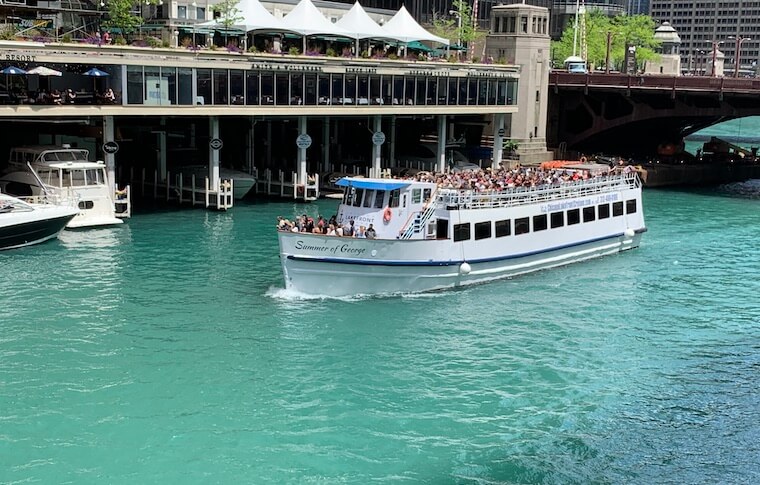
Arrive early enough to pick a seat, but not so early that you stand on the dock baking. Fifteen to twenty-five minutes ahead of departure is ideal. Most boats allow water. Some sell drinks on board. Outside alcohol is not allowed, and food policies vary. Bring a light layer even in summer.
What to bring, no more than you need
- A compact jacket or scarf for wind on the river, even in June.
- Sunglasses and sunscreen, as water reflections multiply UV exposure.
- A small water bottle and a snack, or cash for Riverwalk kiosks.
- Comfortable shoes with grip for metal-grate bridge sidewalks.
- A phone battery pack if you plan heavy photo use.
Variations for kids, winter, and unexpected hiccups
With kids, keep distances modest. Do the boat first to hook interest, then aim for hands-on or visually striking stops on land like the Rookery, the Cloud Gate in Millennium Park, and a short Riverwalk ice cream break. Kayak rentals look tempting on warm days but stack them on a different day if you also want to walk. Attention spans unravel when you pile water on top of water.
In winter, a full river cruise schedule thins, and the Riverwalk loses many vendors. Use the interiors. Plan a shorter loop between the Chicago Cultural Center, the Art Institute, and the Rookery, with a quick river crossing for views and then back into the warm. The Pedway helps on weekdays. The wind scale leaps two notches once you step onto a bridge; hats and gloves matter more than you think.
If a tour cancels for weather or a lock delay turns your 90-minute cruise into a two-hour odyssey, skip one walking segment rather than rushing everything. The point is to absorb, not to check boxes. Move your dinner earlier and take a twilight stroll after if the rain clears. Chicago is honest about its weather. You get the city you get on that day, and it is usually worth it.
How the pieces fit once you have done it once
The second time you take a river cruise, you will find yourself answering the guide’s questions in your head. Your feet will remember which stairs drop to the Riverwalk without dead ends and which lobbies invite you in without fuss. You will adjust your route for the light and dodge crowds without thinking much about it.
The pairing works because it respects scale. The boat gives you a skyline. The walk fixes a handful of details in your memory. Together they build a mental map that lasts, one where Marina City is not just a round oddity from a postcard, but a place where you stood on State Street after a golden hour cruise and watched tail lights curl along the lower deck while a violinist played under the bridge. That is the sort of memory that lingers, and the reason to plan your day with both water and pavement in mind.
Tours & Boats Architecture Tours 900 S Wells St Chicago, IL 60607 ph: (312) 858-6955 https://toursandboats.com