What Makes the Chicago River a Great Route for Architecture Tours
Walk Chicago long enough and the blocks begin to blur. From street level the skyline arrives in fragments, spandrels and spires tucked behind el tracks and traffic. On the river, the city rearranges itself. Buildings step forward, reveal their river faces, and connect into a story that has a beginning, middle, and end. That narrative quality is what makes the Chicago River such a powerful route for architecture tours. It is not only scenic, though it certainly is. The waterway is a backbone that explains how the city works, how it grew, and why its most ambitious ideas often landed on the river’s edge.
The geography that sets the stage
The river’s main stem runs roughly a mile and a half from Lake Michigan to Wolf Point, where it splits into the North and South Branches. That T shape matters. A tour that starts near the lake can glide past the classic ensemble around Michigan Avenue, then follow the water to the city’s original trading post at Wolf Point. Turning north tells one story, a weave of 20th century warehouses refit for life sciences and loft living. Turning south tells another, of industry and rail yards giving way to new office towers and riverfront parks.

The sidewalls are close enough that the river feels like a long room. In downtown stretches the space pinches to about 200 feet across, which concentrates detail. Brackets, rivets, balcony curves, and stone carvings appear almost at eye level. A bus tour can point at a skyline, but a boat can idle beside a façade long enough to understand what you are seeing. Measure that against walking. At street grade you are often looking up from tight sidewalks, craning your neck on corners, blinking at sun glare between lanes. From the water you sit lower than the paving. That flips perspectives. It makes cornices and soffits legible, gives you oblique views through lobbies, and reveals how buildings meet their foundations.
The river also simplifies logistics. You can cover three miles of dense architecture in 75 to 90 minutes without worrying about traffic or stoplights. That creates a continuous thread, a chance to learn how styles, engineering, and economics layer from one block to the next.
The lock as a threshold
Near the mouth sits the Chicago Harbor Lock, a substantial concrete gate that keeps lake water and river water behaving. It is a simple mechanism with big consequences. When the river was reversed in 1900 by the Sanitary and Ship Canal, engineers set up a gentle flow away from Lake Michigan to protect drinking water. The lock makes that reversal practical in the heart of the city, maintaining a small difference in water levels and controlling exchanges with the lake.
For a tour this piece of infrastructure is a stage curtain. Passing through it, you feel an audible pause. The engines drop to idle. The walls loom a few feet away. When the outer gate opens, the light shifts and suddenly you are in the grid of downtown. The lock explains in one move how Chicago thinks: fix the problem, then build around the fix. That habit shows up again and again along the banks.
Bridges that punctuate the ride
Chicago’s downtown hosts one of the world’s densest collections of movable bridges. Along the main stem you cross under a regular drumbeat of trunnion bascules, all counterweights and steel elegance. Each overpass gives your guide a useful punctuation mark. Between State and Dearborn, for example, the Wrigley Building and Tribune Tower share the river bend with a clock tower and a crown of Gothic tracery. Slip under Clark and the view opens to Marina City’s petal garages, still startling after more than half a century.
Bridges bring the human scale back into focus. You see the rivet patterns, the pinstripes of structural steel, the concrete abutments flared like buttresses. Many have operator houses with copper roofs and brick detailing to match adjacent buildings, small reminders that infrastructure here often comes with an architect’s touch. And during spring and fall, the city raises most bridges in choreographed sequences to let sailboats migrate to and from the lake. If you time a tour to trail that procession, you get a moving lesson in urban mechanics.
Facades that were meant for water
Before the lakefront parks and the modern riverwalk, the river was the city’s front door. Freight came in, people came in, and buildings turned their best faces to the banks. You can see that priority in stone and glass. Merchandise Mart, a 1930 behemoth that once held more floor space than any building in the world, curves its riverfront corners like shoulders on a Roman statue. Its piers and setbacks carry the eye horizontally, which you feel most strongly from midstream. Across the water at 333 West Wacker, a mirrored curtain wall bends with the river, so the green glass becomes a camera for buildings on the opposite bank. From the sidewalks, that reflective trick is hard to comprehend. From a boat, you float inside the image.
On the north bank east of Michigan Avenue, the Wrigley Building’s white terra cotta gleams in late afternoon, a color choice made with river light in mind. Tribune Tower’s Gothic crown appears animated from below, the buttresses casting shadows that sharpen with the sun’s angle. Then there is Marina City, Bertrand Goldberg’s twin corncobs, where circular parking decks spiral into petal balconies. At water level, you feel the thickness of those slabs, the honest expression of concrete that reads like a manifesto for mid century urban living.
Continue west and the IBM Building, now AMA Plaza, does its Miesian thing. Black steel. Clear geometry. No apology for the grid. It sets up a dialogue with SOM’s 333 Wacker across the way, a quiet back and forth between rationalism and context. At Wolf Point the story turns contemporary. 150 North Riverside seems to hover, its narrow base flaring into a deep floor plate that cantilevers over train tracks. The trick uses tuned mass dampers and steel-plate shear walls, all designed so the tower can stand on a sliver of land never intended for a high rise. Next door, River Point pulls a great arch over a new public park, curving the office lobby like a gateway to the South Branch.
Move south and history thickens again. The Civic Opera Building plants a limestone cliff 45 stories above the water, a 1929 echo of European opera houses, only squared off and American in its pragmatism. You can see the stage house from the boat. It is a reminder that urban artifacts do not just face a single street. They have backs and sides and mechanical spines. The river reveals those.
Why narration works better on the water
Guides have to fight the city’s noise on land. On the river the soundtrack is controlled. Engines hum. Wind ruffles. You hear a voice without a PA system cranked to twelve. That space lets a good guide teach details that stick. The granite on the riverwalk benches comes from a specific quarry. The bronze medallions along the railings describe the reversal of the river with quiet pride. A mid century office tower hides its mechanical floors with louvered spandrels, which become obvious when you glide past at 5 miles an hour.
A boat also gives a narrator time to connect dots. architecture tours chicago You are not dashing across intersections or waiting at crosswalks. When I guided groups on busy Saturdays, I learned to pair scenes around corners. I would point out a Renaissance Revival bank on one block, then hold a minute until we slid past a glass box that rejected ornament entirely. On the river that comparison took no extra effort. The story lands because the buildings, separated by 50 years and 50 yards, sit in a single unbroken frame.
Light, shadow, and the camera
The main stem runs east to west, which makes light a central player. Mornings near the lake can be contrasty, especially if haze floats in from the water. By mid morning the sun angles high enough to illuminate south facing facades evenly. Late afternoon often gives the best color and warmth, especially on masonry and terra cotta. You will see the Wrigley Building glow ivory and Marina City’s concrete soften from gray to beige. On overcast days the glass buildings become neutral scrims, and reflections on 333 West Wacker sharpen into clean, legible images.
From the boat rail you shoot up at wide angles, which can distort verticals. If you want straighter lines, hold the camera higher and keep the lens axis level with the horizon. Zoom a little rather than leaning. If you care about reflections, sit on the side opposite the façade you want mirrored. The building you hope to see will appear across the water on the curved glass in front of you.
Styles in sequence, not isolation
Architectural styles are easier to parse when river boat tour chicago they arrive in a timeline. The river serves that up without a lecture. Beaux Arts and Neoclassical masonry anchor the earliest skyscraper moments, with buildings like London Guarantee and Trust (now LondonHouse) placing domes and colonnades right on the bend. Art Deco steps in with setbacks, zigzag ornament, and vertical emphasis, as seen at the Board of Trade further south and the Civic Opera on the water. The International Style flattens things, reveals structure, and strips everything back to proportion and detail. Mies and his descendants worked that seam along the river for decades.
Late modernism brings curves and color. 333 West Wacker, then sweeping forms like River Point’s arch. Contemporary work mixes high performance glass with tuned structural moves, like the flared base of 150 North Riverside or the chevron braces you can spot on new residential towers tucked behind the riverwalk. Off to the east, the rippling balconies of Aqua and the stacked forms of the St. Regis peep into view. They are not on the water’s edge, but the river gives you a clean angle on their profiles that you cannot get chicago river tour from Columbus Drive or Wacker.
Seeing these shifts from one moving seat helps people link what they know from books to what stands in front of them. You can spot how a Deco crown finds a modern echo in a minimalist parapet, how a classic tripartite façade mutates into a glass curtain wall with only a vestige of base and top.
The riverwalk as an outdoor gallery
Chicago’s riverwalk, completed in phases over the past decade, adds texture. It steps down to the water with coves, seating, and small pavilions that tuck beneath the bridges. A tour passes at the perfect speed to understand those changes in section. You see where the walkway narrows to slip under a truss, then widens into a pocket for kayaks. You notice how plantings damp sound and draw butterflies. You see people actually use the space, which says more about urban design than any diagram.
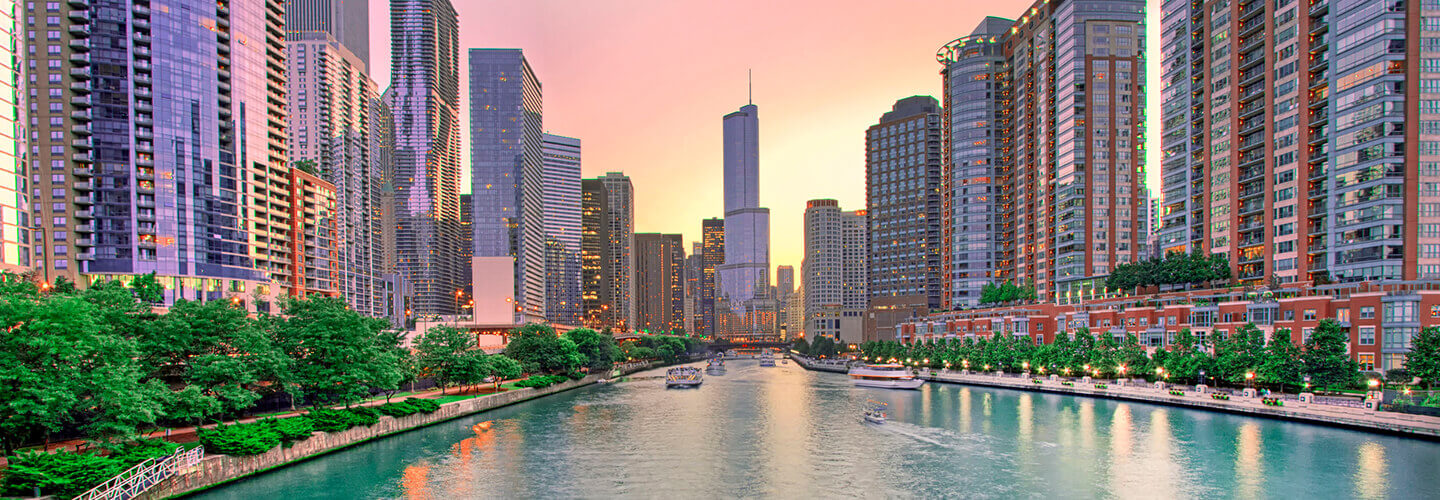
When I ride or guide, I watch for how pedestrians and boats choreograph around each other. On busy weekends the river reads like a piazza, only liquid. Sightseeing boats move slow. Taxis zip. Kayaks trace tight arcs near the walls. That movement tells a broader civic story, one where a waterway once devoted to freight now carries education and leisure without erasing its working identity.
Choosing among chicago architecture boat tours
Not every tour delivers the same experience. Routes are similar, but differences in narration, timing, and vessel design change what you get from the ride.
- Look for docents with training in architecture or urban history, not just a memorized script. The best guides welcome questions and adjust to the day.
- Pick a departure time that suits the light and your tolerance for crowds. Early morning and late afternoon are calmer than peak midday on summer weekends.
- Consider seating. Open upper decks give better sightlines, but shade and wind protection matter on hot or chilly days.
- Check whether the tour uses amplified narration you can hear easily from all seats. Some boats have zones where engine noise competes with the guide.
- Confirm route length. Ninety minutes allows a relaxed pace that can include both branches. Shorter trips might skip the South Branch entirely.
Seasonality, weather, and what that means for the ride
Chicago’s tour season runs from spring into late fall, with a few operators stretching into the shoulder months. Weather shapes what you see and how you feel. A haze off the lake can soften the skyline in May. August heat can make the river air still and bright. October brings crisp light that flatters stone and glass equally. If rain threatens, a light jacket and a pocket towel make the day. I have led trips in steady drizzle that yielded the best reflections I have ever seen, the city’s edges blurring just enough to turn the river into a painter’s palette.
- Spring: cooler air at the lake, budding trees along the riverwalk, and bridge lifts on select days that can add theatre to the route.
- Summer: reliable schedules and full narration, but also the densest crowds. Late evening departures offer relief and golden light.
- Fall: sharp sunlight, long shadows, and thinner traffic. The Civic Opera’s limestone looks carved anew in October.
- Winter: limited departures, but when available, the stark geometry of steel and glass reads with unusual clarity under low sun.
Dress for ten degrees cooler than the sidewalk, even on warm days. Water reflects and wind channels between towers. Sunglasses help with glare near the lock and the river bend east of Columbus Drive. In chill months a hat that covers your ears is worth more than another sweater.
Safety and ease, without losing the sense of adventure
The river is regulated for speed and wake. That protects small craft and keeps tour boats steady enough for photography and note taking. Crew members stand by at the rail when passing under low bridges or loading at crowded docks. The route avoids tight lock schedules once you have entered, and operators maintain defined lanes even during high season.
For visitors with limited mobility, this access matters. Many docks include ramps and broad gangways. Boats often have accessible main decks and restrooms. I have seen multigenerational families, grandparents to strollers, share rows and swap stories. The water makes that sort of outing feasible in a way the sidewalks sometimes do not.
Trade offs and edge cases to consider
A boat can only tell the river’s version of Chicago. You will hear less about inland landmarks like the Rookery’s light court or the Monadnock’s load bearing brick. Traffic noise can spike under certain bridges, and construction barges occasionally narrow channels, forcing detours or pauses that compress the guide’s script. On windy days, narration on the upper deck may lose a few words to gusts if the sound system is not tuned.
These are manageable trade offs. If a crane blocks part of your view of a new tower, that is an honest picture of a growing city. If a barge stacks steel beams at a bend, the guide can use that moment to discuss how 19th century industry set the grid and how 21st century logistics adapt to it.
The view that designers pay attention to
Architects here know the river is a first row seat. You can spot choices made with boat riders in mind. Look at lobby heights and canopy lines along the water, or the way a tower’s crown aligns with a bridge axis. Buildings that might play coy on the street get generous on their riverfronts, with terraces, plazas, and lighting schemes that read from midstream.
Consider 150 North Riverside again. Its park invites people to the edge with steps and lawn aligned to the current. In the evening, LEDs wash the arch at River Point, turning a structural span into a civic gesture. Even the small things count. Handrails that are thin enough not to break a view. Uplights set to avoid glare on the water. As a tour guest, you get to audit those choices in real time, which is a rare privilege in any city.
What happens when the weather turns
One evening in late September I guided a group of high school students from the South Side. A squall line sat offshore. The forecast hedged its bets. We cast off. By the lock the lake’s edge caught a stripe of sun, and the buildings turned the color of honey. Near State Street a brief shower swept under the bridge canopy, just enough to send us all into jackets. The rain lasted a minute. When it moved on, tiny droplets clung to railings and balconies, and the whole river seemed to sparkle. The students stopped scrolling their phones. They looked. I pointed at the reflection on 333 West Wacker, and one of them said, out loud, that it looked like the city was taking a selfie.
That is another argument for the river route. It lets weather participate. Clouds slide like stage scenery. Light bends around corners. You register how the place breathes.
Practical rhythm of a well run tour
Most departures last between 75 and 90 minutes, long enough for the main stem plus one or both branches. Crews coordinate with other vessels by radio, so spacing at popular viewpoints remains comfortable. When traffic stacks up west of Wolf Point, a savvy captain will idle near a façade worth discussing. That pause becomes a chance to study stonework or ask questions about setbacks and zoning rules that once shaped the skyline.
Good narration balances dates and design with lived detail. Guides who know their material can point to the worm tracks in marble on a renovated lobby, then pivot to how a bridge operator raises a span from inside a copper clad house that looks like a toy castle. If they are trained by a group like the Chicago Architecture Center, you tend to get that mix. Even on commercial tours without formal docents, some captains prove to be exceptional storytellers. You hear about the time a winter thaw sent ice floes downstream or how migrating cormorants now perch on bridge trusses in spring.
What sets the experience apart from streets and rooftops
Observatories give you a map view. Sidewalks give you details. The river gives you relationships. You grasp how Wrigley talks to Tribune, how Marina City anticipates later residential towers by the water, how contemporary projects reclaim land once hemmed in by rail rights of way. You notice the city’s appetite for engineering challenges, from reversing a river to balancing a 1.2 million square foot tower on a nut of a site.
You also feel the city as a place people use. Runners on the riverwalk. Office workers eating lunch near planted beds that cut wind while letting the smell of the water seep through. Tour boats sliding under bridges painted in city maroon. A kayaker waving at a wedding party on a terrace above. These are small vignettes, but they add up to a picture you do not get from a bus window.
A few final pointers to get the most from it
If your schedule is flexible, book early or late in the day. Sit on the upstream side when the boat heads west, because facades on the south bank catch warm light in late afternoon. Bring layers and a curiosity about infrastructure. Ask your guide why a façade steps back there, why a tower widens above the fifth floor, why that bridge house has tile that matches the next building. They will have answers, and those answers will anchor the ride in memory.
Among chicago architecture boat tours, focus less on the brand and more on alignment with your interests. If you care about engineering, pick operators that highlight bridges and structural systems. If you want a survey of styles, choose a tour with trained docents and a full route. Either way the river will do its part. It has been explaining Chicago since long before the city took its current shape, and from a seat on the water that explanation remains clear, generous, and impossible to mistake.
Tours & Boats Architecture Tours 900 S Wells St Chicago, IL 60607 ph: (312) 858-6955 https://toursandboats.com