
Why Architectural Boat Tours Are a Classic Chicago Experience
Stand on the Chicago Riverwalk any warm afternoon and you will see it: a gentle parade of open-deck boats, people leaning into the skyline as a docent points out a cornice here, a setback there, the sweep of steel tracing a century of ambition. The city built its identity vertically, but it tells its story horizontally along the water. That is why the architecture boat tour has become a rite of passage for visitors and a recurring pleasure for locals. It is not just sightseeing. It is an urban seminar that smells faintly of river water and, if the wind is right, cocoa from the Blommer Chocolate factory upstream.
I have taken these tours in every season they run, from the first shivery Saturdays of April to late September when the light stays soft and the river looks like glass. I have watched docents revise their routes during spring bridge lifts, listened to an old engineer describe swells in the lake, and once sat under the Wells Street Bridge while a freight train creaked across, close enough to touch the rivets. The enjoyment is always there. The learning deepens every time.
The view that explains the city
Chicago’s architecture does not reveal itself from the sidewalk the way it does from the water. From a boat you see whole elevations at once, something that is impossible from a street corner hemmed by traffic and awnings. Facades appear in sequence like a flipbook. You watch the grid shift at the river’s bends, feel the compression beneath low trusses, and then burst into the wider light of the Main Stem near the lake.
Floating below the Wrigley Building’s white terra-cotta, you can inspect its sculptural details up close, patterns that dissolve into ornament at street level. Across the river the neo-Gothic crown of Tribune Tower picks up the narrative of American media glamour and the 1920s fascination with historic styles. A minute later, the aluminum ribs of 333 Wacker Drive slide into view, curving to mirror the river’s arc. At Wolf Point, where the North and South Branches meet, the skyscrapers frame a scene that has repeated for two centuries, from fur trading posts to 21st-century glass.
That sweep of styles makes sense when you hear how the city rebuilt after the 1871 fire. The disaster cleared vast acreage, but it also triggered experiments in construction that would define the modern skyscraper. William Le Baron Jenney’s Home Insurance Building, erected in 1885 near LaSalle and Adams, used a metal frame to carry weight. Louis Sullivan proposed that tall buildings should wear their height honestly, with vertical lines that draw the eye up. Frank Lloyd Wright turned the Midwestern landscape into geometry. These ideas set the stage for Mies van der Rohe’s strict steel and glass after World War II, for Bertrand Goldberg’s sculptural concrete in Marina City, for Jeanne Gang’s rippling balconies at Aqua and the crystalline St. Regis that now anchors a new edge of the river.
On the water these names become more than architecture history notecards. You grasp how each building converses with its neighbors. You feel why the Chicago School, Modernism, Postmodernism, and contemporary parametric forms all coexist without shouting each other down. The river is the conversation thread.
Rivers shape rules, and rules shape skylines
Any good tour spends at least a few minutes on the engineering that made this city grow. The Chicago River originally drained into Lake Michigan, which was also the water supply. In 1900, the city reversed the river with a lock and canal system to carry waste away from the lake. The Sanitary and Ship Canal turned the river into infrastructure and, in time, a public living room.
You notice the legacy of logistics as you pass the bridges. Downtown hosts one of the greatest collections of movable spans in the world. There are more than a dozen bascule bridges in the central stretch alone, each balanced so a small motor can tip up a leaf that weighs extreme tons. That is how tall-masted sailboats still reach their slips each spring. On some days in April and May, crews lift bridge after bridge in a coordinated ballet, so your boat might thread through portals that look like castle gates hinged from steel.
Rules set by the 1909 Plan of Chicago by Daniel Burnham and Edward Bennett still echo in what you see. The setback lines, the axial views to the lake, the insistence on a grand boulevard system, and later, the decision to create the Riverwalk as a continuous public path, all took the river from backstage to front row. When you drift past the steps near State Street and hear buskers echo off the limestone, you are inside that civic vision.
The boats, the routes, and what you actually get
People often ask if chicago architecture boat tours are all the same. They are not, though the landmarks obviously overlap. There are trips led by the Chicago Architecture Center, whose docents are trained volunteers and retired professionals who can date a cornice by eye. Private companies such as Wendella, Shoreline Sightseeing, and others offer narrated tours that still provide strong content, especially on the main branch. Some companies run shorter loops that stick to the Main Stem between the lake and confluence, about 60 to 75 minutes. The longer runs climb a stretch of the North or South Branch, which adds industrial history and a different pace.
On a typical 90 minute route, expect this arc: depart from the Michigan Avenue area or north toward Navy Pier, head west under a dense lineup of bridges, reach Wolf Point where the river splits and hear a summary of early Chicago, take one branch for a mile or two, then turn back and finish with a pass near the lake, where you will get textbook views of the river mouth and towers aligned against the open water. Some operators also combine a river architecture segment with a short swing onto the lake for skyline views, but that usually comes without deep narration since you are outside the urban canyon.
Ticket prices change by season and day. Midweek in spring, adult fares might run in the low 30s, then climb into the 40 to 60 dollar range in peak summer afternoons and weekends. Sunset and night tours, with buildings lit and reflections deepened, can cost a little more. Expect lines on Saturdays, and prepare for sellouts on holiday weekends. Boats seat anywhere from a few dozen to a few hundred people. Larger vessels feel more stable, smaller ones feel more intimate and can pivot their position for sightlines faster.
Live narration beats recorded audio in almost every case. A savvy docent will adjust to weather, traffic on the river, bridge closures, or unexpected highlights like the drapery of a new facade. Once on a cold May evening, our guide skipped a wind-battered section on the South Branch and instead looped an extra five minutes under the shelter of the older bridges, filling the time with a story about the Dearborn Street Bridge’s counterweights and why cyclists used to dismount there when the grating got slick.
The surprise of materials and structure at water level
Chicago teaches structure honestly. On a boat, you are close enough to read it. Look up at the external bracing on the building formerly known as the John Hancock Center. You can see the X-bracing reduce the need for interior columns and stiffen the tower against wind, a direct response to lake gusts that will shove at you during the lakefront segment. Pivot across the river, and you notice how some newer glass boxes soften that force with aerodynamic forms or tuned mass dampers, techniques that an attentive guide might explain in plain language.
Marina City’s corncobs can feel like theater from the street. From the water, they read as engineering logic: cylindrical floors ease the cantilever for those petal balconies. Aqua’s undulating slabs feel decorative in photos, yet up close you understand how deep slabs help mitigate wind turbulence. Jeanne Gang’s later St. Regis stacks three volumes of differing glass tones and heights, a move that breaks up the downdraft around its base. All those choices relate to the river and lake winds. A well-run tour lets you feel the physics, not just see the shapes.
The best example remains Willis Tower, often still called by its old name in casual conversation. Fazlur Khan’s bundled tube system, an arrangement of nine square tubes of differing heights, allowed extreme height with efficient use of steel. On a clear afternoon, the stacked massing makes sense from a boat 1,000 yards away, where parallax shows the tubes stepping back. Aerial photos flatten this. The river gives you the correct distance and angle.
River versus lake, day versus night
Most visitors book the river tour first. It is the right call if you want architecture explained, street by street. Lake tours provide the postcard skyline, a slightly detached perspective that emphasizes silhouette and scale. When the lake behaves, that arc architectural river cruise chicago outside the lock to turn and face the city can catch your breath. When it does not, you will be glad you chose the river, which remains calm under most wind conditions thanks to the urban canyon and lower fetch.
Here is a quick matching of experiences to preferences:
- Choose a pure river architecture tour if you want detailed narration and close-up views of specific buildings.
- Choose a combo river and lake tour if you want one pass of deep architecture plus the classic skyline shot from open water.
- Choose a lake-only cruise if you prefer a relaxed panorama with less technical detail and more breeze, especially on hot days.
- Choose a night tour if you enjoy reflections and illuminated crowns, and can tolerate slightly less visibility of fine detail.
- Choose a smaller-boat operator if intimacy and agility matter more than a bar on board or extra stability.
Daylight shows details you would miss after dusk. Terra-cotta glazes, spandrel patterns, the faint tint differences in curtain wall glass, even wear marks on bridge trusses, all pop in the afternoon. Night gives you mood. The setbacks turn theatrical, and the water captures lines of light that feel like a painter’s underdrawing. A neutral tone narrator can make either work by shifting focus, describing form in sunshine, then talking history and civic planning at night when ornaments fade.
Bridges, river life, and the rhythm underfoot
If you time it right in spring or fall, your captain may hold position while a bridge lift convoy proceeds. Watching a bascule bridge rise and lock in place changes how you think about downtown. This city leaves room for boats the way others leave room for trains. The smell of hydraulic oil and river water, the whirring gears, the sight of a tender leaning out from the control house, these details fold into the architectural story. Bridges are buildings that move, and their design constraints pushed surrounding streets and facades into the forms you will see.
The Riverwalk adds a layer of human life that many cities lack. On sunny days, office workers eat lunch on stair-steps at the Marina, anglers cast into eddies beneath flower planters, and families in kayaks stitch between tour boats. Those kayakers are a reminder that this waterway now has to serve ecology as well as industry and tourism. The water has grown cleaner over decades, thanks to policy and treatment upgrades. On tours I have watched herons lift from the bank near a mooring and turtles climb a log that drifted down after rain. Architecture does not float above this. New riverfront designs include fish habitat shelves and native plantings to soften edges and filter runoff.
The guide matters, and so does the seat you choose
A good guide turns a list of dates into a walk through time. Listen for docents who connect materials to economics and politics. Why did terra-cotta soar in the early 20th century? Fire codes, insurance pressures, and new kiln technologies made it both beautiful and prudent. Why does Modernism dominate after 1950? Postwar corporate growth wanted buildings that signaled efficiency and universality, and Mies’s exacting language provided it. Why do newer towers twist or stack? The city’s zoning density bonuses and wind loads shape those choices, along with developers chasing a skyline identity.
Seat choices change the feel. Sit forward if you like the wind and a sense of arrival at each bend. Sit aft for better sound and slightly less spray after a rain. I prefer midship on the starboard side when departing west, so most dockside facades slide by at conversational distance. If you are capturing photos, move when the captain permits. The best vantage often changes every minute as bridges and sightlines align.
Weather, seasons, and the city’s mood
People underestimate how much weather molds the tour. Spring light at 5 p.m. Makes the glass read a pale green, and shadows from bridges act like theater scrims. In July at noon, the river is a mirror. Bring sunglasses and, if you can, a simple polarizing filter for a camera to tame reflections. Autumn gives you the gold of trees along the Riverwalk and cleaner air that sharpens long views to the west.
Rain does not ruin the experience. Ponchos appear, the narration adopts a cozy aside, and you see details that disappear in glare. Terra-cotta glistens. Mottled granite turns saturated. The only true stopper is lightning, which can cause delays or cancellations. High water after extreme rain sometimes pushes the river up toward the low beams of the older bridges. That can restrict how far a tall tour boat ventures up a branch. In those cases, docents will pivot and spend more time along the Main Stem, where clearances are higher.
Winter tours exist in a limited fashion when conditions allow, but the robust season runs from spring through late fall. The sweet spot for photography and comfort arrives May through early October. Weekdays late afternoon often deliver milder crowds, better light, and calmer narrations unpressed by back to back schedules.
Costs, accessibility, and practicalities on board
Most operators offer onboard restrooms, a bar with simple drinks, and open seating with some covered rows. Boats comply with Coast Guard safety rules, and crew will brief you on life jackets and exits. Ramps at major docks handle wheelchairs and strollers, though steepness varies with river level. If accessibility is a priority, call ahead and ask about dock conditions at the time of your visit. Some boats have lower thresholds, wider aisles, and reserved areas that make movement easier.
Food policies vary. Many allow small snacks, especially if purchased on site, while outside alcohol is typically forbidden. Expect bag checks on busy weekends. Allow time to line up and board early if you want first choice of seats. Twenty minutes usually suffices, though more popular departures can fill faster. A flexible schedule helps if a sudden storm forces a pause, since operators try to rebook guests on the next safe voyage.
Service dogs are generally permitted, but always confirm with the operator. If you are sensitive to motion, pick the larger, lower deck for extra stability. River conditions are gentle most days. On lake segments, swells can be choppy when the wind stacks waves along the shoreline. Those fifteen minutes outside the lock feel like a different sport entirely.
What the river teaches you about Chicago’s character
Chicago is a builder’s city. It does not always advertise that fact with self-importance. You find it in practical poetry: right angles that yield at the river’s bends, a skyscraper that explains its structure with nothing more than a black grid, a pair of towers that look like cobs yet function like a vertical small town of cars, apartments, and a marina. The boat tour puts that attitude in plain view. It is not about perfect beauty. It is about resolve, iteration, and civics.
Take the Merchandise Mart. It used to be the largest building in the world by floor area, a block-long mass of Art Deco power built for wholesale trade. From the water, it sprawls rather than soars. You see how commerce needed a warehouse of refined heft, not a glass needle. Now it houses tech firms and showrooms, and at night boat ride in chicago river its facade becomes a screen for digitized murals. The city recycles its giants.
Or look at the St. Regis. It stands where the river meets the lakefront parks, a hinge between the traditional office skyline and the newer residential surge along Lakeshore East. The shift from pure office towers to mixed-use living mirrors how the Loop itself no longer empties at 5 p.m. That lived-in quality, visible from a boat in the number of balconies, riverfront patios, and pedestrians on the Riverwalk, tells you the water is no longer a moat that separates commerce from life. It is the living room.
How to prepare so you can actually enjoy it
Over time I have made and fixed the same mistakes. I have roasted in July without sunscreen, sat behind a talkative group during a good story, and brought the wrong lens for a day of flat white sky. A small amount of preparation will pay for itself the moment your boat noses under Michigan Avenue and the city opens like a book.
- Book a mid to late afternoon slot for softer light, and aim for a weekday to reduce crowds.
- Bring layers, sunscreen, and a hat that secures under the chin, since the river can be breezy even on hot days.
- If you want photos, carry a polarizing filter or sunglasses to cut glare, and clean your phone lens before boarding.
- Arrive 20 to 30 minutes early to choose a seat with both shade and sun options, then be ready to move when the guide encourages it.
- Check bridge lift schedules in spring and fall, and build in a buffer of 45 minutes after your scheduled return in case of river traffic delays.
That is the practical side. The other side involves attention. Set your phone aside between photos and listen. A practice I started years ago is to pick one building in each style and focus on its details, instead of trying to absorb everything at once. One trip I spent 10 minutes just watching the geometry of 150 North Riverside fit into its tight site with sharp, angled legs that flare to meet a minimal footprint. Another time I compared the corners of three glass towers to see how mullions change shadow depth.
When a classic stay classic
Cities reinvent their tourism constantly, but some experiences remain because they deliver something essential. Chicago’s architecture tours on the river do this by compressing 150 years of building into a short passage that you feel in your body. You sit low, the banks loom, bridges mark time like metronomes, and the story unfolds in steel, stone, glass, and water. It suits first timers who want the hits, architecture students who want to test textbook claims against reality, and locals who track the skyline as a personal diary.
Every year, a new building tweaks the familiar view. Some debut a clever facade. Others add a plaza where you did not think a plaza could fit. A tour makes room for those updates without discarding the foundational story. It keeps Chicago’s best classroom afloat, architectural boat tours chicago literally and figuratively.
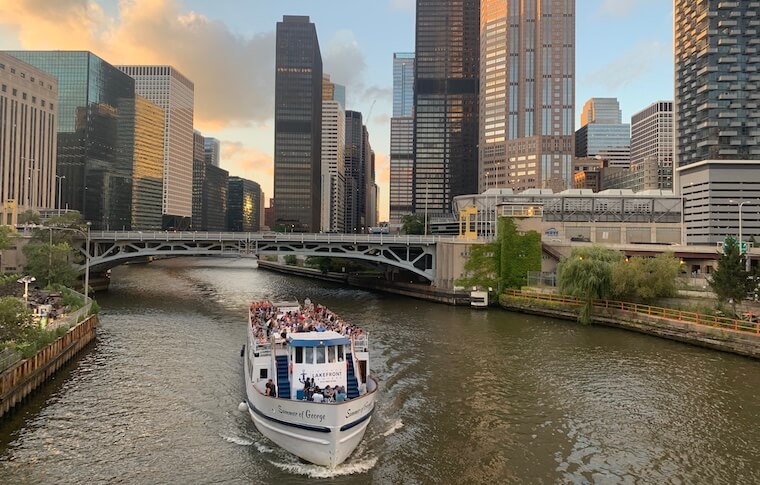
And then there are the small rituals. The horn that echoes off the bridgework as you push off the dock. The tourists pointing up at a pair of kayakers sliding under a pier. The guide, mid-sentence, pausing to let a train thunder overhead. You will remember a dozen images, but one will stick. For me it is late daylight hitting the ledges of aqua glass while a gentle wake moves the reflections like silk. It made the buildings look alive. It made the city feel both engineered and natural in the space of a second.
That is why these tours endure. Chicago invites you to read it. The boat places the book open on your lap, and the pages turn themselves.
Tours & Boats Architecture Tours 900 S Wells St Chicago, IL 60607 ph: (312) 858-6955 https://toursandboats.com